


Patient education · Hyaluronic acid fillers
Hyaluronic Acid Fillers: What They Are and Why Product Selection Matters
A guide to composition, texture and the differences between facial, body and intimate-area applications.

The key point
Hyaluronic acid is the starting material—not a guarantee that every filler behaves the same way. The exact gel, treatment area, clinical evidence and practitioner’s experience all matter. A product suitable for one facial area is not automatically suitable for another part of the body.
What is hyaluronic acid?
Hyaluronic acid, often shortened to HA, is a water-binding polysaccharide: a long chain of sugar molecules naturally present in tissues including the skin and cartilage. Injectable HA fillers use a manufactured gel to add volume in selected treatment areas. Some formulations also contain a local anaesthetic such as lidocaine. The complete formulation matters, particularly when discussing allergies. FDA: filler materials
HA is different from silicone and from permanent particulate fillers. Its familiar presence in the body helps explain its usefulness, but “naturally occurring” does not mean that every manufactured product or every injection is risk-free.
A brief history
Karl Meyer and John Palmer described hyaluronic acid in 1934, in research on the vitreous humour of the eye. Modern aesthetic fillers came much later: non-animal stabilised HA products entered the European market in the 1990s. More than 90 years of HA research should not be confused with 90 years of evidence for every current filler application. Original 1934 paper · Manufacturer history
Where does HA filler come from, and how is it made?
Many modern HA fillers use material produced by bacterial fermentation rather than extraction from animal tissue. Fermentation is followed by purification; it does not mean that live bacteria are injected. Historically, some HA products used animal sources, including rooster combs. The source should be checked for the specific product.
01Produce
Obtain HA through a controlled manufacturing process.
02Purify
Remove unwanted residual materials.
03Stabilise
Create the gel’s intended structure and properties.
04Check
Test the finished product and its sterile delivery system.
Unmodified HA is broken down relatively quickly. Many fillers therefore use cross-linking—connections between HA chains—to make the gel last longer. Manufacturing choices influence firmness, flexibility and particle structure. These are engineered characteristics, not simply differences in the amount of HA in a syringe. How a manufacturer makes HA gels
Quality assurance also matters. For example, AbbVie’s Pringy manufacturing facility describes testing for sterility, endotoxins, visible particles, gel rheology and syringe performance. An authentic product, a traceable batch and an intact, in-date package are practical questions to raise during consultation. Manufacturing and quality controls
Firmness, viscosity and “density”: what is the difference?
Two syringes can both contain HA yet feel and behave differently. “Density” is often used loosely in conversation; it should not be treated as a substitute for a product’s measured properties.

| Property | Plain-English meaning | Why it matters |
|---|---|---|
| Elasticity / G′ | Resistance to deformation and ability to retain shape. | Helps describe firmness and support. |
| Viscosity | Resistance to flow under specified conditions. | Helps describe how the gel moves; it is not the same as firmness. |
| Cohesivity | How strongly the gel holds together. | Affects its behaviour as a gel mass. |
| HA concentration | The amount of HA per millilitre. | A concentration number alone cannot rank products. |
| Water uptake | The gel’s tendency to absorb additional water. | Relevant when assessing volume and swelling. |
| Cross-linking and structure | How HA chains and gel particles are organised. | Contribute to flexibility, stability and other properties. |
Laboratory comparisons are most useful when the same testing methods are used. A single G′ value or concentration should not be used as a stand-alone prescription for an individual patient. Standardised testing of HA filler properties
Why “not too soft, not too stiff” needs context
Dr. Amin’s product-selection principle is to balance support with flexibility and a suitable feel for the treatment area. Choosing the firmest available gel is not the objective. Neither is choosing a very soft product simply because it works well elsewhere. There is no single numerical “ideal density” established for every patient or every intimate-area application.
Are facial fillers, body fillers and intimate-area fillers interchangeable?
No. These labels describe applications or marketing categories, not three universally standardised materials. Even within facial treatment, different products may be designed for different locations and tissue requirements.
| Application | What needs checking | What not to assume |
|---|---|---|
| Facial areas | The exact product, approved site and intended tissue placement. | Approval for one facial use covers every facial or body use. |
| Body applications | The named body area, local product authorisation and supporting evidence. | “Body filler” on a brochure means suitable for all body areas. |
| Intimate areas, including penile girth | Product-specific evidence, local regulatory status, anatomy and realistic expectations. | A facial or body label, by itself, establishes suitability. |
In the United States, FDA dermal-filler approvals cover specified indications, mainly facial areas and the backs of the hands; penile girth enhancement is not an approved indication. The FDA also warns against unapproved injectable body-contouring uses. US approval does not establish UAE authorisation: the actual product and intended use must be checked locally. FDA indications · FDA body-contouring information
It would also be inaccurate to say that every gel used for facial treatment is categorically unsuitable for penile use. Restylane SubQ, for example, has been studied in both facial augmentation and penile girth research. Such studies do not create regulatory approval or show that all HA fillers are interchangeable. They underline why the discussion must focus on the particular formulation and evidence. Facial clinical study · Penile clinical study
The European Association of Urology gives HA injections a weak recommendation for penile girth enhancement and strongly recommends discussion of benefits and risks. A consultation should include the option of no treatment. For an overview of the clinical service, see our HA filler consultation and treatment guide. EAU guidance
Which countries manufacture established HA fillers?
Established manufacturing examples include Sweden, where Galderma manufactures Restylane in Uppsala; France, where Allergan Aesthetics has an HA filler production centre in Pringy; and South Korea, where LG Chem developed its YVOIRE HA filler range. Sweden · France · South Korea
These are examples of manufacturers, not recommendations for intimate-area use. A country name or a well-known company is not enough: the precise model, authorised supply chain and treatment indication matter more than a general claim that one country makes the “best filler”.
Is hyaluronic acid filler safe?
HA has useful biological properties, and many patients tolerate treatment well. However, both the product and the procedure need to be assessed. Bruising, swelling and tenderness can occur. Infection, nodules, inflammatory reactions and vascular injury are also possible. Genuine products, appropriate patient selection and careful sterile technique reduce avoidable risk; they cannot make it zero. FDA safety information
Penile HA studies have documented nodules and infections, even though these were uncommon in some cohorts. A complication rate from one study cannot be promised to every patient or transferred to a different product and technique. Clinical complications study
What about allergy?
Allergic reactions are possible, although they are not among the most common reported effects. Non-animal production does not eliminate sensitivity to a product’s components. Discuss previous filler reactions, severe allergies and any reaction to local anaesthetics before treatment. Active infection or inflammation at the intended site needs assessment before proceeding. Product safety considerations
After treatment: severe or worsening pain, pale or dusky skin, fever, or spreading redness should prompt urgent medical assessment. Do not wait for a routine review if these occur.
Why being temporary can be an advantage
HA filler is gradually broken down. For someone who does not want a permanent implanted material, this can be an advantage. It also means that results change over time and maintenance may be needed. Longevity depends on the formulation, area, amount used and individual response—not simply on whether a needle or cannula was used.
Selected HA-related problems can be treated with an enzyme that breaks down HA, but this requires medical assessment. “Dissolvable” does not mean every complication can be immediately or completely reversed. The manufacturer’s product information and the clinician’s follow-up plan should explain what correction can realistically achieve. HA and dissolving treatment
Why the practitioner’s experience matters
Product knowledge includes knowing when not to inject. An experienced practitioner should be able to explain why a particular gel suits the proposed area, what the evidence shows, what remains uncertain, and how any complication would be managed.
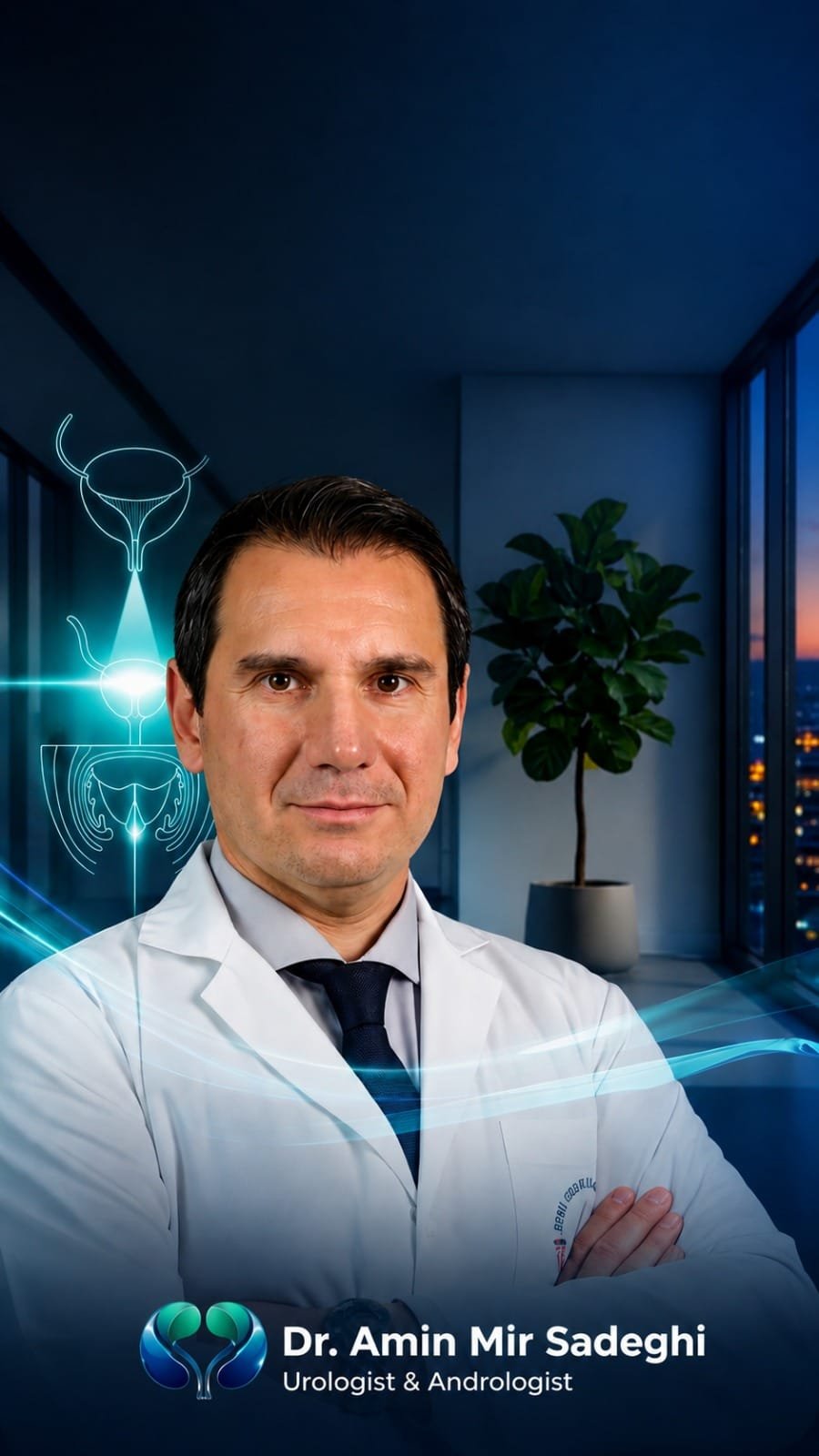
Dr. Amin is a urologist and andrologist with more than a decade of filler-injection experience, as described in his clinical practice history. His approach emphasises individual assessment and familiarity with the properties of the selected HA product. For his qualifications and professional background, visit About Dr. Amin.
How Dr. Amin describes his technique
Dr. Amin describes using a short needle with injections distributed across multiple points. The aim is controlled placement and an even distribution of the selected gel. The exact technique is a clinical decision following examination; this article is not an injection protocol.
No instrument can guarantee freedom from nodules or infection. A recent retrospective comparison found similar 12-month girth changes with cannula and multipuncture approaches, but fewer recorded complications in the cannula group. Because the study was not randomised and did not test Dr. Amin’s specific protocol, it cannot settle which approach is best for an individual patient. The choice should be explained during consultation. 2026 technique comparison
Useful questions to bring to your consultation
- What is the exact product and why is it suitable for my treatment area?
- Is this use included in the product’s local authorisation, or is it off-label?
- What result is realistic, and how might it change over time?
- What follow-up and complication-management arrangements are available?
You can arrange a consultation with Dr. Amin to discuss these questions and decide whether treatment is appropriate.
Frequently asked questions about HA fillers
Is HA filler the same substance as HA in a moisturiser?
The underlying molecule is related, but a skin-care product and a sterile injectable gel are different products. Creams and serums must never be injected.
Does a higher HA concentration mean a better filler?
No. Concentration is only one characteristic. Structure, elasticity, viscosity, cohesivity and the intended use need to be considered together.
Can I ask for the filler I previously had in my face?
You can tell the doctor its name and your previous response. However, successful facial use does not establish that it is suitable for another site. The doctor needs to assess the exact formulation and proposed use.
Is a body filler automatically suitable for intimate treatment?
No. Ask which specific body area the product is intended for and what evidence supports the proposed application. Marketing terminology does not replace a product label or clinical assessment.
Does Dr. Amin use a needle or a cannula?
For the approach described here, Dr. Amin uses a short needle at multiple points. The consultation explains why that approach is selected and its alternatives. This is not a promise of longer-lasting results or zero complications.
Can small, distributed injections prevent every lump?
No. Careful distribution is an aim of treatment, but irregularities and nodules remain possible. Any persistent lump should be reviewed rather than self-treated.
Will the filler disappear on a fixed date?
No. Breakdown and the visible result vary. Follow-up is more useful than a universal expiry date for the effect, and additional treatment should be based on reassessment.
What should I bring to a filler consultation?
Bring details of previous fillers or procedures, current medicines, allergies and relevant medical conditions. If available, bring the product label or treatment record from earlier injections.
Private office · Personalised care
Consultation & Outpatient Procedures
Meet Dr. Amin Mir Sadeghi at his private practice within Medical Village Dubai for confidential, personalised urology care. Outpatient treatment options are discussed after an individual medical assessment.
Medical Village · Al Manara, Dubai
Clinic hours: Daily, 12:00–19:00, by prior appointment
Appointments & WhatsApp: +971 56 796 3993
All times are Dubai time.
Surgical care in Dubai
Hospitals for Urological Surgery
Dr. Amin Mir Sadeghi performs urological surgery at American Academy of Cosmetic Surgery Hospital and Trellis Hospital in Dubai. Contact Dr. Amin's team to discuss your procedure and arrange your appointment.
Surgical care with Dr. Amin · Dubai
Surgical care with Dr. Amin · Dubai
Appointments are arranged directly by Dr. Amin's team. The team will confirm the hospital and availability.