


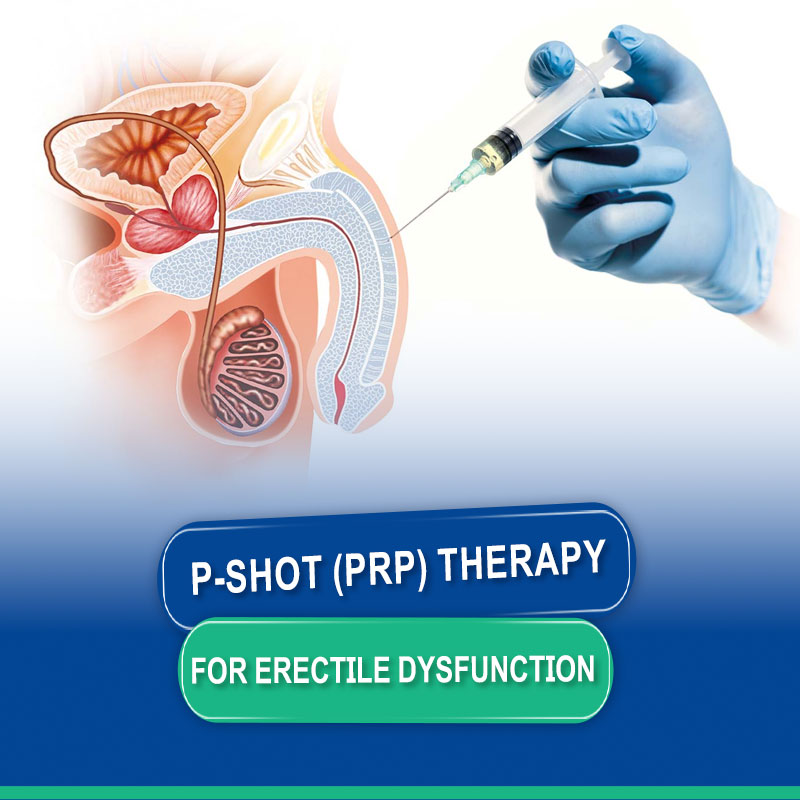
Erectile dysfunction (ED) affects millions of men worldwide and often has a significant impact on emotional well-being, self-confidence, intimate relationships, and overall quality of life. While traditional ED treatments—such as oral medications, vacuum devices, or surgery—can be effective, they do not work for everyone and sometimes cause side effects.
The P-Shot, also known as PRP therapy for erectile dysfunction, is an innovative, minimally-invasive treatment that uses a patient’s own platelet-rich plasma to stimulate tissue repair, enhance blood flow, and potentially improve sexual function. Many men report improved erections, increased sensitivity, and enhanced sexual satisfaction after treatment.
This article provides a complete, evidence-based guide to the P-Shot, including how it works, who it is for, the procedure steps, reported benefits, scientific limitations, and safety considerations.
What Is Erectile Dysfunction (ED)?
Erectile dysfunction occurs when a man is unable to achieve or maintain an erection firm enough for sexual intercourse. Causes can be physical, psychological, or a combination of both.
Common Causes of Erectile Dysfunction
- Poor blood circulation or vascular disease
- High blood pressure and arterial hardening
- Diabetes
- Smoking and heavy alcohol consumption
- Hormonal disorders (e.g., low testosterone)
- Side effects of certain medications
- Prostate surgery or pelvic surgery
- Nerve damage from injury or neurological disease (Parkinson’s, MS)
- Peyronie’s disease (penile scar tissue)
- Stress, anxiety, or depression
- Obesity and chronic fatigue
Because ED can be a sign of underlying health conditions, a medical evaluation is essential before starting any treatment.
What Is the P-Shot / PRP Therapy?
The P-Shot — short for Priapus Shot — is a procedure in which a patient’s own blood is drawn, then processed (typically using centrifugation) to isolate platelet-rich plasma (PRP). Platelets contain growth factors and bioactive proteins that are thought to aid in tissue regeneration, vascular healing, and cellular repair. The PRP is then injected into penile tissue (shaft, base, or other target areas) with the goal of improving blood flow, regenerating tissue (including blood vessels and potentially nerves), and thereby enhancing erectile function, sensitivity, and potentially sexual performance.
Because the blood used is the patient’s own, the P-Shot is minimally invasive, typically done in an outpatient setting, and does not involve major surgery. The procedure usually takes a short time (often under 30 minutes), and recovery is relatively quick — many men can resume their regular activities the same day or the next.
When injected into specific areas of the penis, PRP may stimulate:
- new blood vessel growth
- improved blood flow
- regeneration of nerves
- repair of damaged tissue
- improved sensitivity
Because the material comes from the patient’s own blood, the risk of allergic reactions is extremely low.
How PRP Works: The Science Behind the P-Shot
The theoretical rationale behind P-Shot / PRP therapy for ED includes several possible mechanisms:
- Improving blood flow / vascular regeneration: The growth factors in PRP may stimulate the growth of new blood vessels (angiogenesis) and improve the health of existing vascular structures — which could improve blood flow to penile tissue, a key component of achieving and sustaining erections.
- Tissue repair and regeneration: PRP may help repair or rejuvenate damaged tissue (e.g., smooth muscle tissue, connective tissue) in the penis, including the corpora cavernosa, which are crucial for erection.
- Nerve regeneration or improved neural response: Some proponents suggest PRP might stimulate regeneration of nerve fibers or improve nerve function — possibly enhancing sensitivity, sexual sensation, and orgasmic response.
- Non-surgical and natural approach: Because PRP is derived from the patient’s own blood, the risk of allergic reactions or rejection is essentially eliminated; the therapy is positioned as a more “natural” and less invasive alternative to surgery or long-term medication.
How the P-Shot Procedure Is Performed
The procedure is quick—usually 30–40 minutes—and minimally invasive.

Step-by-Step Process
- Medical Evaluation
Your doctor reviews your sexual health, medical history, medications, and ED symptoms. - Blood Draw
A small amount of blood is taken from your arm. - Centrifugation
The blood is placed in a centrifuge to separate the platelet-rich plasma from red and white blood cells. - PRP Preparation
The concentrated PRP—rich in growth factors—is collected in a sterile syringe. - Topical Numbing
A strong numbing cream or anesthetic is applied to the penis to ensure comfort. - Targeted Injection
PRP is injected into specific parts of the penis, typically the shaft and base, depending on the treatment plan.
Patients generally report minimal discomfort due to effective numbing. Most men can return to normal activities the same day.
How Many Sessions Are Needed?
Many clinics recommend 1–3 sessions, spaced 20–30 days apart, depending on the patient’s condition and goals.
Reported Benefits of the P-Shot
While individual results vary, many men describe noticeable improvements after treatment. Reported benefits include:
✔ Improved Ability to Achieve & Maintain Erections
Better blood flow may lead to stronger, firmer, and longer-lasting erections.
✔ Increased Sensitivity & Enhanced Sexual Pleasure
Some patients experience heightened sensations and more intense orgasms.
✔ Improved Peyronie’s Disease Symptoms
PRP may reduce scar tissue, soften plaques, and improve curvature.
✔ Potential Increase in Size (Non-Guaranteed)
Some clinics report modest increases in penile length or girth due to tissue regeneration, although this is not guaranteed.
✔ Better Overall Sexual Confidence
Restoring function often leads to improved emotional well-being and relationship satisfaction.
✔ Natural, Non-Surgical, Minimally-Invasive
No implants, no synthetic drugs, and no downtime.
How Effective Is the P-Shot? (What Research Says)
It’s natural to want to know how well the P-Shot works before deciding.
So far, clinical studies and real-world experience are encouraging:
- Several human studies have shown mild to moderate improvement in erectile function, especially in men with mild to moderate ED.
- Many patients report better erection quality, improved sensitivity, and greater sexual satisfaction after treatment.
- Some men notice improvements within a few weeks, and the results can last for several months.
- Because the P-Shot uses your own blood (PRP), it is generally well-tolerated with a very low risk of allergy or systemic side effects.
Advantages of PRP Over Medications (Viagra, Cialis)
Many men turn to the P-Shot because they want a more regenerative, long-lasting solution compared to pills.
Potential Advantages
- No need to take medication before sexual activity
- No systemic side effects (headaches, vision issues)
- May improve the underlying tissue, not just symptoms
- Results may last 12–18 months for some patients
- Minimal downtime and low risk of allergic reactions
However, medications are still supported by stronger scientific evidence.
Risks & Side Effects
One of the main advantages of the P-Shot is that it uses your own blood (platelet-rich plasma), so the treatment is usually very well tolerated.
Most men can return to their normal activities the same day, and serious problems are very rare when the procedure is done by an experienced urologist in a sterile medical setting.
Common, temporary effects may include:
- Mild swelling or fullness in the treated area.
- Light bruising or redness at the injection sites.
- Temporary tenderness, tingling, or sensitivity.
These usually settle within a few hours to a few days and are often managed with simple measures such as cold compresses and gentle care of the area.
Rare but possible risks (as with any injection):
- Local infection
- Local inflammation or small nodules
- Temporary changes in feeling or appearance
We minimize these risks by using strict sterile technique, careful injection methods, and detailed after-care instructions.Because erectile dysfunction can be related to issues like blood-vessel health, hormones, diabetes, stress, or medications, I always assess and treat the underlying causes as well. The P-Shot is used as part of a comprehensive plan to improve erection quality and sexual function, not just a quick fix.
In our practice, many men report better erection quality, stronger rigidity, and greater confidence after the P-Shot, with a very low rate of side effects. If you are a suitable candidate, this treatment can be a safe, natural option to help support your sexual health.
Who Is a Good Candidate for the P-Shot?
The P-Shot may be suitable for men who:
- Have mild to moderate ED
- Want a natural, non-surgical treatment
- Have Peyronie’s disease
- Experience reduced penile sensitivity
- Cannot tolerate ED medications
- Prefer regenerative or long-term improvement
It may be less effective for severe ED caused by major vascular disease or advanced nerve damage—these cases often require alternative treatments such as penile implants.
Why Some Men Consider P-Shot: Potential Advantages Over Medications
Given the limitations of conventional treatments (pills, surgery, lifestyle change), some men may consider P-Shot for the following perceived — though not guaranteed — advantages:
- They are looking for a non-surgical, less invasive option. Unlike surgery (e.g., penile implants) or long-term reliance on ED medications, the P-Shot is minimally invasive and uses the patient’s own blood.
- They desire longer-term improvement rather than “on-demand” effects (as with pills). Some believe that PRP’s regenerative potential might result in more permanent tissue improvement.
- They prefer a “natural” therapy — using the body’s own healing mechanisms rather than introducing external drugs.
- They want to address tissue health, blood flow, or nerve damage — not just temporarily enhance erection, but potentially improve the underlying physical function of the penis.
What to Know Before Considering P-Shot
If you are thinking about the P-Shot, the most important step is to choose the right specialist and technique. The result you get depends a lot on who performs it, how it is done, and how well your overall sexual health is evaluated.
At our center, your treatment is performed and supervised by Dr Amin Mirsadeghi, one of the most experienced urologists in the region in the field of men’s sexual health, with over 10 years of experience using advanced treatments such as PRP/P-Shot, penile implants, and other erectile-dysfunction therapies.
Before you decide, keep these points in mind:
- Have a full consultation with an experienced urologist — A proper visit is not just about the injection. Dr Amin carefully assesses your erections, medical history, hormones, circulation, medications, and lifestyle. Many men have contributing factors such as cardiovascular disease, diabetes, or hormonal imbalance.
- Realistic but positive expectations: The P-Shot can Improve erection quality and rigidity, Enhance sensitivity and sexual satisfaction and Support better response to tablets or other treatments. Results are individual and no treatment can guarantee a “perfect” erection forever, but in carefully selected patients we often see meaningful improvement in function and confidence.
- Technique and protocol matter: We use medical-grade PRP systems, strict sterile technique, and a standardized protocol that Dr Amin has refined over many years. A strong numbing protocol and gentle injection technique are used to keep you comfortable throughout the procedure. This professional approach is very different from quick, marketing-based injections done in non-specialist clinics
- Safety and comfort first: Because the P-Shot uses your own blood, the risk of allergy is extremely low. Most men experience only mild, short-term swelling or tenderness, and can return to daily activities quickly. Dr Amin explains all possible side effects and after-care instructions so you know exactly what to expect and how to protect your result.
- Part of a complete treatment plan: The P-Shot works best when it is part of a personalized plan that may also include lifestyle changes, medications, hormonal optimization, psychological support, or other procedures. During your consultation, Dr Amin will design a step-by-step plan tailored to your needs and goals.
If you would like to know whether you are a good candidate, the best way is to book a consultation with Dr Amin so he can examine you, answer your questions, and discuss the most suitable options for you.
What to Expect After the Procedure
- Immediate Effects; Some men report improved firmness or sensitivity within hours or days.
- Peak Results; Most improvements occur after 8–12 weeks, as tissue regeneration takes time.
- Longevity; Effects may last 12–18 months, though this varies.
Conclusion: Is the P-Shot Right for You?
The P-Shot represents an intriguing, innovative approach to addressing erectile dysfunction and sexual performance — leveraging the body’s own regenerative potential through PRP therapy. Its appeal lies in being non-surgical, relatively simple, and “natural.” Some men and clinicians report subjective improvements in erection quality, sensitivity, and sexual satisfaction.
However, the current scientific landscape does not yet support the P-Shot as a proven or standard therapy. There is insufficient robust evidence regarding its effectiveness, long-term benefits, safety, and whether it can reliably treat ED or penile-related conditions such as penile curvature or tissue damage. Major medical reviews and professional societies emphasize the experimental status of PRP for sexual health.
Therefore, if you decide to consider the P-Shot, proceed with caution — ideally after thorough medical evaluation, with realistic expectations, and as part of a broader strategy that addresses overall health, lifestyle, and possible underlying causes of sexual dysfunction.