


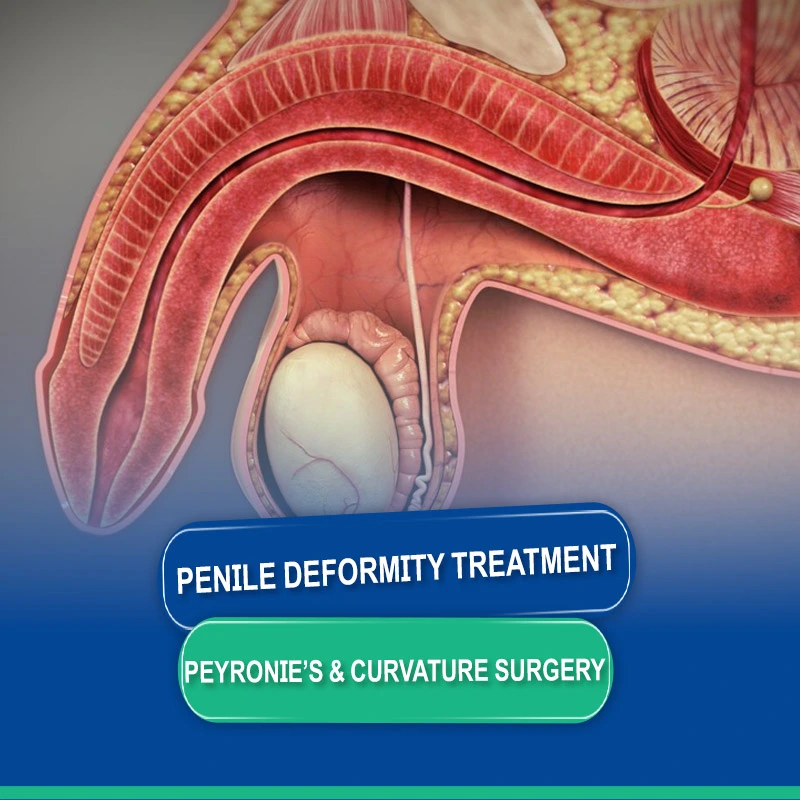
What Is Penile Deformity?
Penile deformity refers to any abnormal curvature, structural irregularity, shortening, indentation, or distortion of the penis—most commonly noticeable during erection.
While a mild curvature (between 5 and 30 degrees) is considered normal anatomical variation, a more pronounced deviation may lead to pain, erectile dysfunction, difficulty with intercourse, or psychological distress.
Penile deformities are broadly classified into:
- Congenital deformities (present at birth)
- Acquired deformities (develop later in life)
Understanding the difference between normal curvature and a pathological condition is the first step toward appropriate treatment.
Normal Penile Curvature vs. Medical Condition
It is important to clarify that not all penile curvature is abnormal.
Clinical guidelines suggest:
- 5–30 degrees: Normal variation
- 30–45 degrees: May cause mild difficulty
- >60 degrees: Often interferes with intercourse
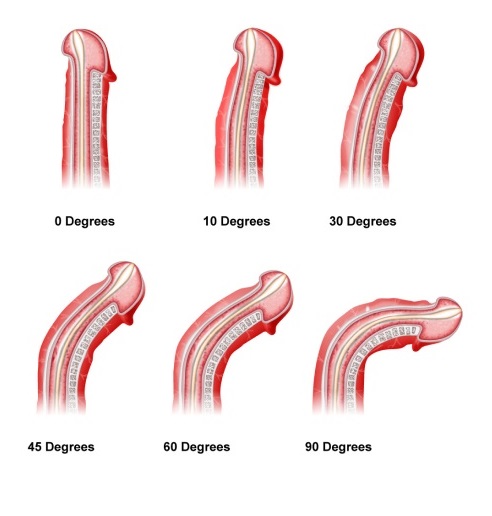
A curvature becomes medically significant when it:
- Causes pain during erection
- Prevents penetration
- Is progressive
- Is associated with shortening or narrowing
- Causes erectile dysfunction
Types of Penile Deformities
1. Peyronie’s Disease (Most Common Acquired Cause)
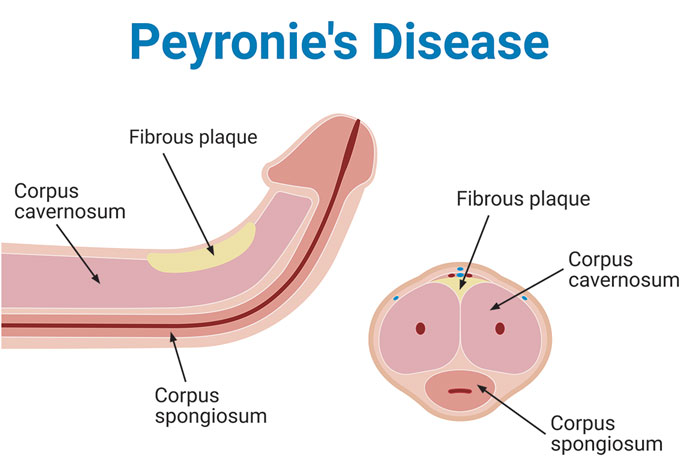
Peyronie’s disease is characterized by the formation of fibrous scar tissue (plaques) within the tunica albuginea, the fibrous envelope surrounding erectile tissue.
Epidemiology
- Affects approximately 3–9% of adult men
- Most common between ages 40–70
- Higher prevalence in men with diabetes or Dupuytren’s contracture
Pathophysiology
Microtrauma to an erect penis leads to abnormal wound healing, collagen deposition, and plaque formation.
Symptoms
- Curvature (upward, downward, lateral)
- Pain during erection (early stage)
- Penile shortening (1–3 cm in severe cases)
- Hourglass deformity
- Erectile dysfunction (30–50%)
Disease Phases
Acute Phase (6–18 months)
- Progressive curvature
- Painful erections
Stable Phase
- Pain decreases
- Curvature stabilizes
Early intervention during the acute phase may prevent progression.
2. Congenital Penile Curvature (Chordee Without Hypospadias)
Congenital curvature occurs due to asymmetric development of the corporal bodies.
Key features:
- Present since first erections
- No plaque formation
- Non-progressive
- Often ventral (downward) curvature
Unlike Peyronie’s disease, there is no inflammatory phase.
Surgical correction has a success rate exceeding 90% when performed by experienced reconstructive urologists.
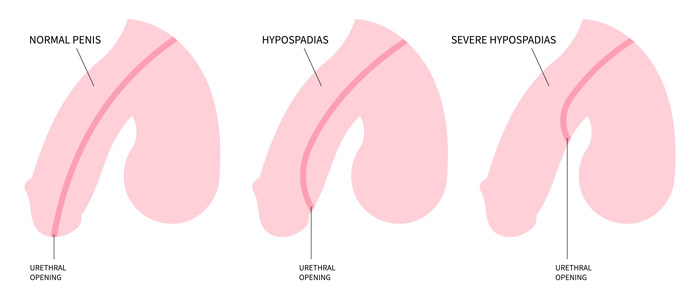
3. Hypospadias and Associated Deformity
Hypospadias involves abnormal positioning of the urethral opening.
When associated with chordee, it may cause:
- Downward curvature
- Urinary spraying
- Sexual dysfunction in adulthood if untreated
Many patients undergo childhood correction but may require adult revision.
4. Buried Penis
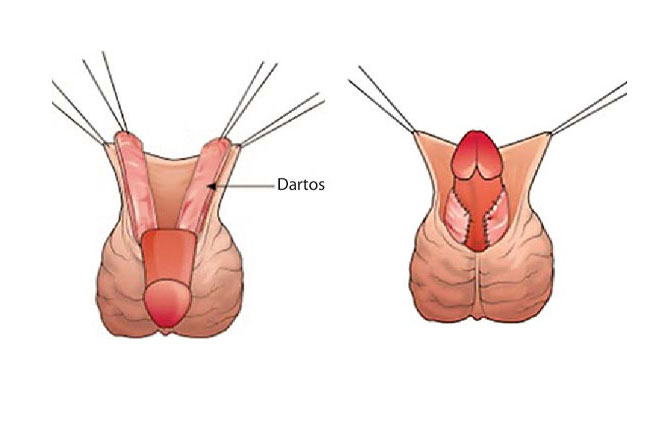
A buried penis is partially or completely concealed beneath surrounding tissue.
Common causes:
- Obesity (can conceal up to 2–4 cm of length)
- Excess suprapubic fat
- Scarring after surgery
- Lymphedema
Buried penis may cause hygiene issues, urinary difficulty, and psychological embarrassment.
5. Penile Shortening
Penile shortening may result from:
- Peyronie’s disease
- Radical prostatectomy
- Aging-related fibrosis
- Pelvic surgery
- Obesity
Even a 1–2 cm perceived reduction can significantly affect sexual confidence.
Causes of Penile Deformity
1) Trauma During Intercourse
Certain sexual positions increase risk of bending injury.
2) Penile Fracture
Audible “pop,” immediate swelling, bruising — requires emergency surgery.
3) Vascular Insufficiency
Softer erections are more prone to injury.
4) Diabetes & Hypertension
Associated with abnormal collagen deposition.
5) Connective Tissue Disorders
Dupuytren’s contracture is linked with Peyronie’s disease.
6) Surgical Complications
Scar formation after circumcision or pelvic surgery.
Psychological Impact of Penile Deformity
Penile deformity is not merely cosmetic.
Clinical data indicates:
- Up to 50% of patients report depressive symptoms.
- 80% experience reduced sexual confidence.
- Relationship strain is common.
Men may avoid intimacy due to embarrassment or fear of failure. Addressing emotional health is a key part of treatment.
Diagnosis of Penile Deformity
1. Detailed Medical History
The urologist evaluates:
- Onset
- Progression
- Pain severity
- Erectile function
- History of trauma
2. Physical Examination
Plaque palpation and deformity classification.
3. Induced Erection Assessment
A vasoactive injection allows accurate curvature measurement.
4. Penile Doppler Ultrasound
Assesses:
- Blood flow
- Plaque size
- Calcification
- Arterial insufficiency
5. Curvature Measurement
A goniometer measures the precise angle.
Objective documentation guides treatment planning.
Non-Surgical Treatment Options
Best suited for mild to moderate cases.
1) Collagenase Clostridium Histolyticum (Xiaflex)
FDA-approved injectable therapy.
Indicated for:
- Curvature between 30–90 degrees
- Stable Peyronie’s disease
Average improvement: 15–20 degrees
Multiple treatment cycles required.
2) Penile Traction Therapy (PTT)
Mechanical device worn daily for several hours.
Benefits:
- Reduces curvature
- Preserves length
- Improves tissue elasticity
Evidence suggests measurable improvement after 3–6 months.
3) Vacuum Erection Devices
Support blood flow and maintain elasticity.
4) Oral Medications
PDE5 inhibitors (sildenafil, tadalafil) improve erection rigidity and may reduce further injury risk.
When Is Surgery Necessary?
Surgery is recommended when:
- Curvature prevents intercourse
- Severe deformity (>60 degrees)
- Erectile dysfunction coexists
- Disease stable for 3–6 months
Surgical Treatment Options
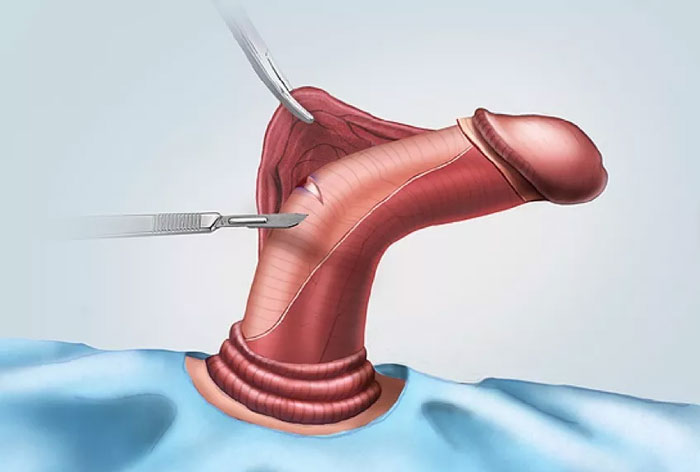
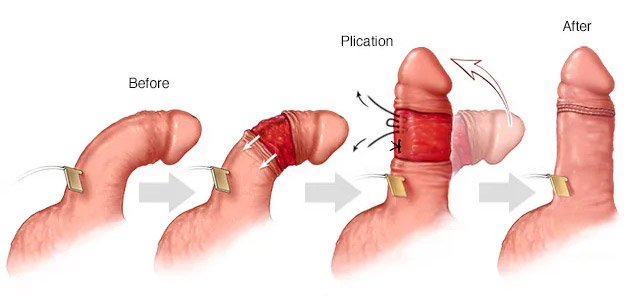
1. Penile Plication Surgery
Technique:
- Sutures placed on longer side
- Straightens penis
Advantages:
- Short operative time
- 85–95% success rate
- Low complication risk
Possible drawback:
- Mild shortening (<1 cm)
Best for curvatures <60 degrees without severe narrowing.
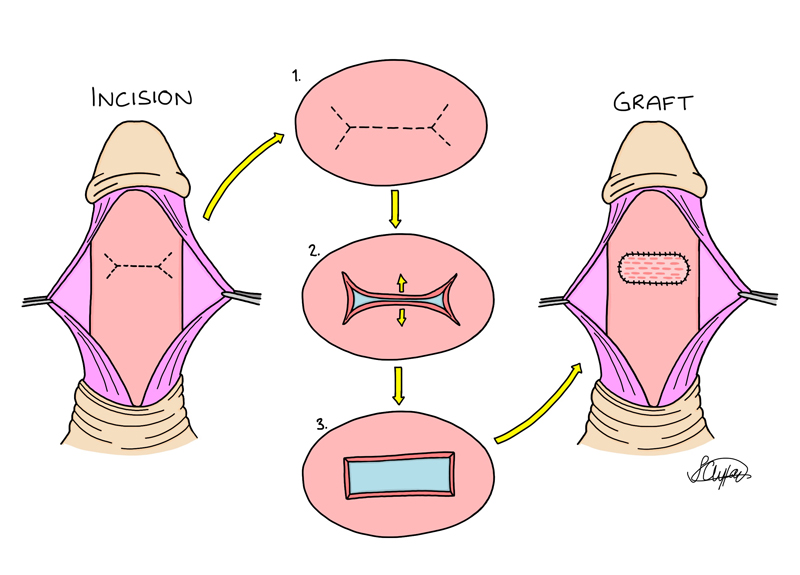
2. Plaque Incision and Grafting
Used for:
- Severe curvature
- Hourglass deformity
- Significant shortening
Procedure:
- Plaque incised
- Graft placed
Preserves length but technically more complex.
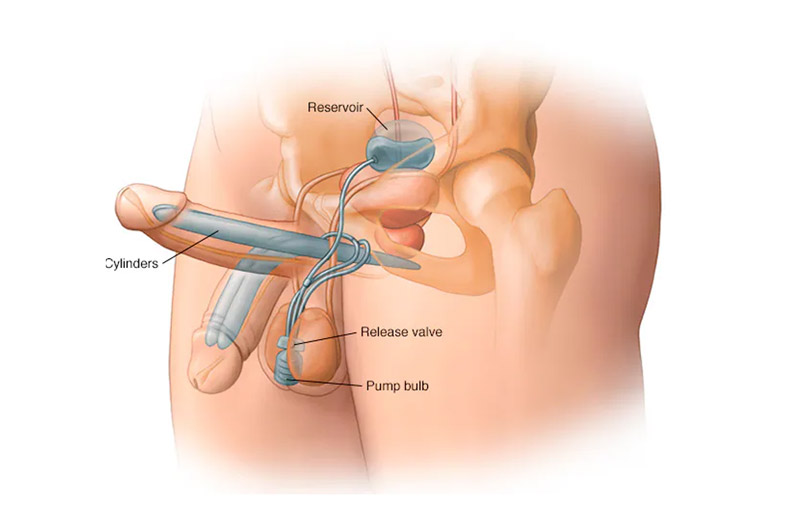
3. Penile Prosthesis Implantation
Gold standard for patients with:
- Peyronie’s + erectile dysfunction
- Severe structural instability
Modern inflatable implants offer:
- Natural appearance
- On-demand rigidity
- 90% patient satisfaction
Curvature correction is performed during implantation.
Recovery After Penile Deformity Surgery
- Return to desk work: 3–5 days
- Swelling resolves: 2–4 weeks
- Resume sexual activity: 4–8 weeks
- Full healing: 3 months
Most patients report dramatic improvement in confidence and relationship satisfaction.
Penile Deformity Treatment in UAE
Patients seeking advanced evaluation and surgical correction for penile deformity can receive comprehensive care at American Academy Hospital – Dubai.
All diagnostic procedures, non-surgical therapies, and advanced reconstructive surgeries are performed in a fully equipped hospital setting, ensuring:
- Modern surgical infrastructure
- Advanced penile Doppler imaging
- FDA-approved injectable therapies
- State-of-the-art penile prosthesis systems
- International standards of patient safety and care
Dubai has become a leading destination for medical tourism in urology, offering world-class facilities and specialized reconstructive expertise under one roof.
Patients benefit from hospital-based treatment, structured preoperative assessment, and carefully monitored postoperative recovery in a premium clinical environment.
Medical tourism in Dubai has grown significantly, with urology being one of the leading specialties.
Can Penile Deformity Be Prevented?
Congenital forms cannot be prevented.
Risk reduction strategies include:
- Use lubrication during intercourse
- Avoid forceful bending
- Maintain healthy BMI
- Treat erectile dysfunction early
- Seek medical evaluation at first signs of curvature
Early intervention improves long-term outcomes.
Frequently Asked Questions (FAQ)
1) What degree of penile curvature is normal?
Between 5–30 degrees is typically normal and requires no treatment unless symptomatic.
2) Can penile deformity go away on its own?
Mild cases may stabilize, but significant curvature rarely resolves without medical treatment.
3) Does penile deformity affect fertility?
No. It does not affect sperm production. Fertility is only impacted if intercourse becomes physically impossible.
4) Is surgery safe?
Yes. When performed by experienced reconstructive urologists, success rates exceed 85–95%.
5) When is it an emergency?
If you hear a popping sound during erection followed by swelling, bruising, or loss of erection — seek emergency care immediately.
Conclusion
Penile deformity is a treatable and manageable medical condition.
Whether caused by congenital curvature, Peyronie’s disease, trauma, or structural imbalance, modern urology offers highly effective solutions — from non-invasive therapy to advanced reconstructive surgery.
Early evaluation leads to better functional and psychological outcomes.
If curvature, pain, or erectile dysfunction is affecting your quality of life, consultation with an experienced urologist is the first step toward restoring both function and confidence.