


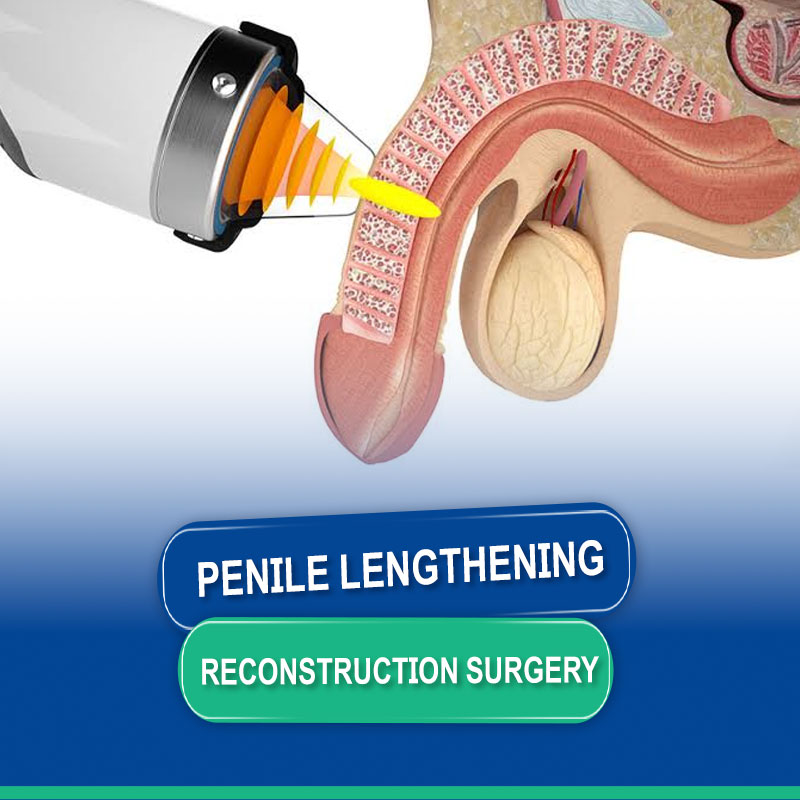
Penile Lengthening Surgery Is Not the Same for Every Patient.
Many men ask about penile lengthening surgery because they feel their penis is shorter than normal. In reality, most men who request penile enlargement have a normal penile size. The problem may be dissatisfaction, comparison with unrealistic images, anxiety, suprapubic fat, penoscrotal webbing, skin laxity, or poor erection quality rather than a truly short penis.
At the same time, some patients do have a real reconstructive problem. Congenital conditions, trauma, burns, circumcision complications, previous surgery, severe scarring, obesity, weight loss, and bariatric surgery can damage or hide the penile shaft. In these patients, surgery is not simply cosmetic. It may be needed to restore visible length, functional length, hygiene, urination, sexual activity, and quality of life.
This article explains three important surgical groups used in selected patients: V-Y plasty and penoscrotal web repair, suspensory ligament release, and suprapubic fat removal or pubic lift.
The Most Important Concept: Real Length vs Functional Length
Before discussing surgery, patients should understand an essential concept. The anatomical length of the penis is measured from the pubic bone to the tip of the glans. Most cosmetic penile operations do not truly increase the length of the erectile bodies inside the penis. Instead, they improve the visible and accessible part of the penis.
For example, a man may have a total penile length of 20 cm from the pubic bone to the glans, but because of a large suprapubic fat pad, loose pubic skin, and penoscrotal webbing, only 10 to 12 cm may be functionally accessible during intercourse. After suprapubic fat removal, skin lift, and web release, the accessible length may increase to 15 or 16 cm.
In this situation, the main benefit is not a magical increase in the internal penile body. The main benefit is increased functional penile length: more of the existing penis becomes visible, usable, and accessible during sexual activity.
Who May Need Penile Lengthening or Reconstruction Surgery?
Penile lengthening or reconstruction surgery may be considered for different groups of patients. The correct technique depends on the anatomy and the main cause of the problem.
Patients may benefit if they have:
- A buried or hidden penis due to suprapubic fat
- Excessive loose skin after major weight loss or bariatric surgery
- A penoscrotal web that hides the underside of the shaft
- Skin shortage or scarring after circumcision or previous surgery
- Trauma, burns, or infection causing penile skin damage
- Functional difficulty during intercourse because the shaft is hidden
- Hygiene problems, urine trapping, or recurrent inflammation due to buried penis
- Aesthetic concern with realistic expectations after medical evaluation
A proper examination is necessary before any operation. The surgeon must evaluate suprapubic fat, skin quality, scrotal attachment, penile shaft skin, erection quality, and patient expectations.
Surgery 1: V-Y Plasty and Penoscrotal Web Repair
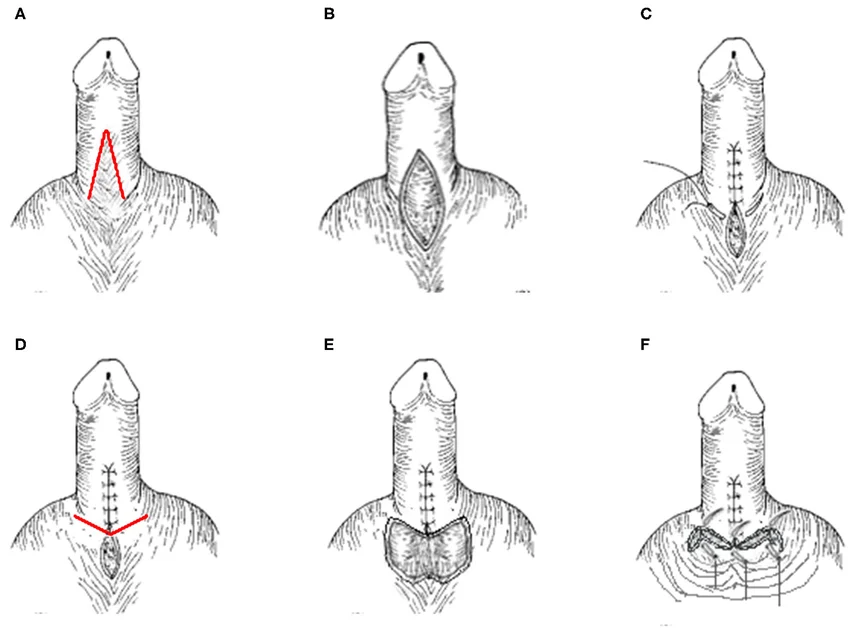
V-Y plasty is a skin advancement technique that may be used in selected penile lengthening or reconstruction operations. It can help advance skin and improve the penopubic or penoscrotal skin relationship depending on the surgical plan.
Penoscrotal web repair is used when the scrotal skin is attached too high on the underside of the penis. This creates a web-like appearance and makes the penis look shorter, especially from below. In some men, it can also affect sexual function because the shaft is not clearly separated from the scrotum.
The goal of penoscrotal web repair is to release or remove the web and reconstruct the angle between the penis and scrotum. This may improve penile shape, visible shaft length, and functional access during intercourse.
Different surgical methods can be used depending on the case, including V-Y plasty, Z-plasty, scrotoplasty, ventral phalloplasty, or web release with skin rearrangement. The technique must be selected according to the severity of the web, skin availability, and cosmetic goal.
What Penoscrotal Web Repair Can Improve
Penoscrotal web repair can improve the appearance of the penis by making the underside of the shaft more visible. It may also make the penis look longer because the scrotal skin no longer climbs up the shaft.
This surgery may improve:
- The penile-scrotal angle
- Visible shaft length from below
- Sexual access and penetration comfort
- Cosmetic definition between penis and scrotum
- Hygiene and skin comfort in selected patients
However, it does not increase the internal erectile body length. Its main value is improving shape and accessible length.
Surgery 2: Suspensory Ligament Release
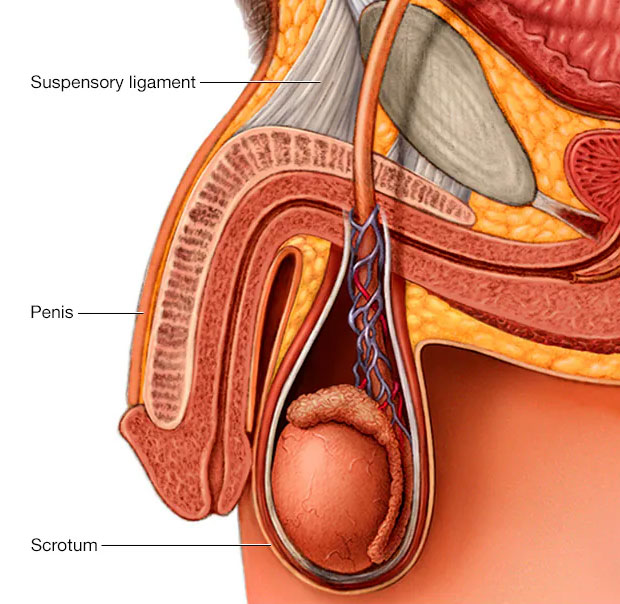
The suspensory ligament attaches the penis to the pubic bone and supports the angle of the penis. In suspensory ligament release, this ligament is divided to allow part of the internal penile shaft to move forward and become more visible in the flaccid state.
This operation is often discussed as penile lengthening surgery. However, patients must understand the limitations. Suspensory ligament release usually affects flaccid visible length more than erect length. It may also change the erection angle. If performed alone, results can be disappointing in some patients, and scar formation may reduce the benefit.
For this reason, suspensory ligament release should not be presented as a simple guaranteed lengthening operation. It is best considered only after careful assessment and often works better when combined with skin advancement, suprapubic fat removal, or other reconstructive techniques in selected patients.
Important Limitations of Suspensory Ligament Release
Suspensory ligament release has limitations and should be discussed honestly.
Important points include:
- It may improve flaccid visible length more than erect length
- It may not significantly increase true bone-to-glans penile length
- It may change erection angle or support
- Scar formation may reduce the result
- Patient satisfaction is variable if expectations are unrealistic
- It should be performed only by surgeons familiar with penile anatomy
The best candidates are not simply men who want a larger penis. The best candidates are selected patients whose anatomy shows that ligament release can add value as part of a broader reconstructive plan.
Surgery 3: Suprapubic Fat Removal, Pubic Lipectomy, or Pubic Lift
For many patients, the most effective operation for improving visible and functional penile length is not ligament release. It is removal of excessive suprapubic fat and loose skin.
This is especially true in men who have:
- A large suprapubic fat pad
- Obesity-related buried penis
- Loose suprapubic skin after weight loss
- Excessive skin after bariatric surgery
- A hidden penile base caused by fat and skin covering the shaft
This operation may be described as suprapubic fat removal, pubic lipectomy, suprapubic lipectomy, escutcheonectomy, or pubic lift, depending on the exact technique and tissue removed.
The aim is to remove the fat and excessive skin above the penis, lift the pubic area, and expose more of the penile shaft. In selected patients, this can create the most visible and functional improvement because it reveals a length that was already present but hidden.
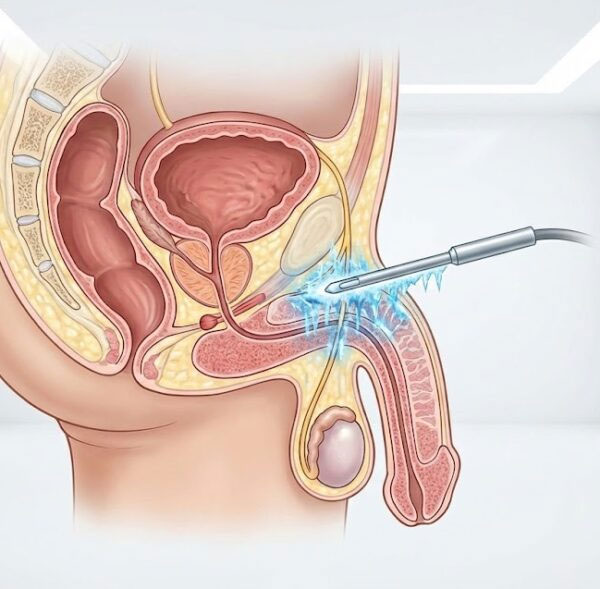
Why Suprapubic Lipectomy Can Give the Best Result
When a thick fat pad covers the penile base, the penis may look much shorter than its real anatomical length. During intercourse, part of the shaft may remain buried inside the fat and skin, reducing functional penetration length.
By removing suprapubic fat and excessive skin, the surgeon can bring the penile base forward and make more of the shaft available. This can improve both appearance and sexual function.
This is why suprapubic lipectomy or pubic lift may be the most effective option in patients with significant suprapubic fat, loose skin after major weight loss, or post-bariatric changes. It improves the visible and accessible penis without pretending to create a new internal penile length.
Why Surgeon Experience Is Critical
Suprapubic fat removal and penile reconstruction are not ordinary cosmetic operations. The surgeon must understand penile anatomy, blood supply, lymphatic drainage, pubic skin tension, scrotal attachment, and the functional needs of intercourse and urination.
This surgery has the best result when performed by an experienced surgeon, preferably a urologist or reconstructive surgeon familiar with penile anatomy. The technique is specific and delicate. Removing too little tissue may give a weak result. Removing too much tissue or closing the skin with excessive tension can lead to wound problems, poor scarring, deformity, or recurrence.
A good result depends on correct planning, safe dissection, proper fixation, tension-free closure, and realistic patient counseling.
Combination Surgery: Often the Best Approach
Many patients do not have only one problem. A man may have suprapubic fat, loose pubic skin, penoscrotal webbing, and a buried penile base at the same time. In such cases, one technique alone may not be enough.
A combined approach may include:
- Suprapubic fat removal or pubic lift
- Excision of excessive suprapubic skin
- Penoscrotal web release or scrotoplasty
- V-Y plasty or Z-plasty when needed
- Suspensory ligament release in selected patients
- Penile filler injection later if girth enhancement is also desired
The combination of suspensory ligament release, suprapubic fat and skin removal, and penoscrotal web repair can improve penile shape, visible length, and functional length in carefully selected patients.
What Result Should Patients Expect?
The result should be explained in honest and simple language. These operations usually improve visible length, accessible length, and penile shape. They may not dramatically increase true internal erectile body length.
A realistic goal is:
- More visible penile shaft
- Better access during intercourse
- Better penile-scrotal angle
- Less buried appearance
- Improved hygiene and comfort
- Improved confidence in selected patients
The patient should not expect an unrealistic transformation. The best result comes when the surgery matches the anatomy and the patient understands the difference between true length and functional length.
Recovery After Penile Lengthening or Reconstruction Surgery
Recovery depends on the exact operation. A minor web repair has a different recovery from a large suprapubic lipectomy or buried penis reconstruction.
General recovery instructions may include:
- Rest and avoid strenuous activity in the early healing period
- Keep the wound clean and dry according to instructions
- Take antibiotics and pain medication if prescribed
- Avoid gym, heavy lifting, sauna, jacuzzi, and swimming until cleared
- Avoid sexual intercourse until the surgeon confirms healing
- Attend all follow-up visits
- Report fever, severe pain, increasing redness, discharge, wound opening, or severe swelling
Some patients may need drains, compression, special dressing, or longer wound care depending on the extent of suprapubic surgery and skin reconstruction.
Possible Risks and Complications
All surgery has potential risks. These should be discussed before the procedure.
Possible risks include:
- Swelling and bruising
- Pain or tenderness
- Infection
- Bleeding or hematoma
- Wound opening or delayed healing
- Visible scar
- Skin necrosis, rarely
- Recurrence of buried appearance
- Asymmetry
- Change in erection angle after ligament release
- Reduced satisfaction if expectations are unrealistic
The risk depends on patient health, smoking, diabetes, obesity, surgical extent, tissue quality, and surgeon experience. Proper patient selection and careful technique are essential.
Who Is Not a Good Candidate?
Not every man who wants a larger penis is a good candidate for surgery.
Surgery may not be suitable if the patient has:
- Unrealistic expectations
- Untreated body image disorder or severe anxiety
- Active genital infection
- Poorly controlled diabetes
- Heavy smoking without stopping before surgery
- Severe obesity without a realistic plan
- Poor wound-healing condition
- Untreated erectile dysfunction as the main concern
- No anatomical problem that surgery can improve
In some men, counseling, reassurance, weight reduction, erectile dysfunction treatment, or penile filler may be more appropriate than surgery.
Final Message
Penile lengthening and reconstruction surgery should be based on anatomy, not marketing promises. Most patients who ask for penile enlargement have a normal penile size, but some have hidden penis, suprapubic fat, loose skin, penoscrotal webbing, trauma, surgical complications, or true reconstructive needs.
The main benefit of surgery is often an increase in functional penile length: more of the existing penis becomes visible, accessible, and usable during intercourse. Suprapubic fat removal and pubic lift may give the best result in patients with a large fat pad or loose skin after weight loss or bariatric surgery. Penoscrotal web repair improves the shape and visible underside of the penis. Suspensory ligament release may be useful in selected cases, especially as part of a combined reconstructive plan.
The safest and most satisfying result comes from proper evaluation, realistic expectations, and surgery performed by an experienced urologist familiar with penile anatomy.
FAQ
1)Does penile lengthening surgery really increase penis size?
It depends on what is meant by size. Many operations improve visible and functional length by exposing more of the existing shaft. They usually do not dramatically increase the internal erectile body length.
2)What is functional penile length?
Functional penile length is the part of the penis that is visible, accessible, and usable during intercourse. In men with suprapubic fat or webbing, functional length may be much shorter than anatomical length.
3)Which surgery gives the best result for hidden penis?
In patients with a large suprapubic fat pad or loose skin, suprapubic fat removal, pubic lipectomy, or pubic lift often gives the most effective visible and functional improvement.
4)What is penoscrotal web repair?
It is surgery to release or reconstruct scrotal skin that attaches too high on the underside of the penis. It improves the penile-scrotal angle and can make the shaft look longer.
5)Is suspensory ligament release enough by itself?
In many patients, ligament release alone is not enough and may give variable satisfaction. It is often better considered as part of a combined plan in selected patients.
6)Can surgery improve penetration length?
Yes, in selected patients. By removing fat and loose skin or repairing webbing, more of the existing shaft may become accessible during intercourse.
7)Can penile filler be combined with surgery?
Yes. In selected patients, filler may be used later to improve girth after the surgical wounds have healed and the anatomy is stable.
Penile reconstruction may involve different procedures depending on anatomy, previous surgery, trauma, scarring, buried penis, penoscrotal webbing, or other medical factors. This page does not guarantee increased penile length, improved sexual function, or a specific surgical result. A detailed examination is necessary to decide whether surgery is appropriate and what outcome may be realistic.
Learn more about specialist treatment options for buried or hidden penis conditions.

Official hospital profile
Specialist Urologist at American Academy of Cosmetic Surgery Hospital
Dr. Seyed Amin Mir Sadeghi's official professional profile is published on the hospital website.