


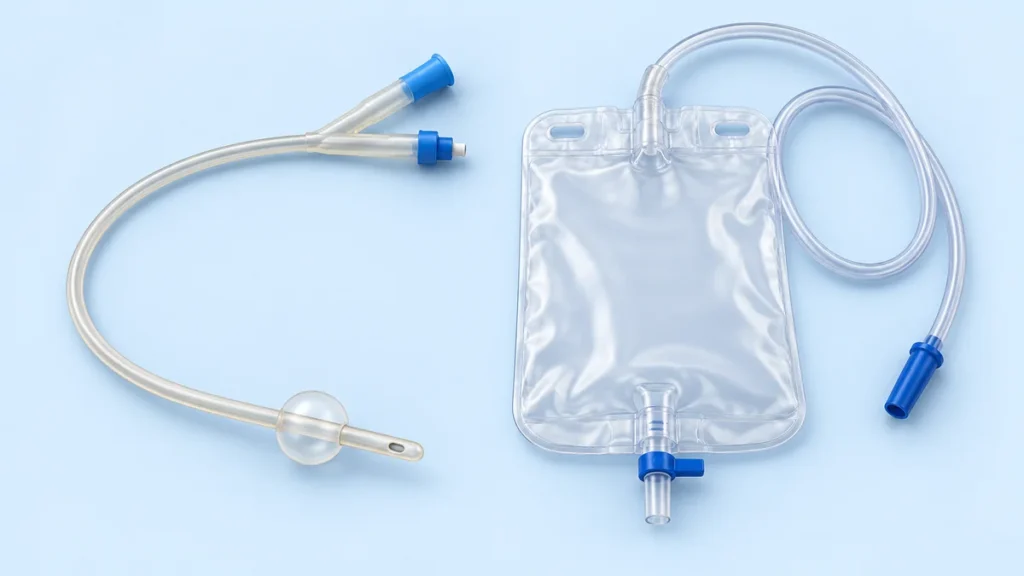
A urinary catheter is a thin, flexible tube used to drain urine from the bladder when a person cannot urinate normally. Urinary catheterization is commonly performed in men and women experiencing urinary retention, prostate problems, or difficulty emptying the bladder.
But why is a urinary catheter needed? How is it inserted? Can you insert one yourself, and how long can it stay in place? Here is what you need to know.
What Is a Urinary Catheter and Why Is It Used?
A urinary catheter helps empty the bladder when normal urination is difficult or impossible. Common reasons include:
- Urinary retention: Inability to empty the bladder.
- Enlarged prostate (BPH): Prostate enlargement blocking urine flow in men.
- After surgery: Temporary bladder drainage following prostate or other surgical procedures.
- Neurological conditions: Nerve problems affecting bladder control.
- Urinary obstruction: Blockage or narrowing of the urinary tract.
- Urine monitoring: Measuring urine output in certain hospitalized patients.
A catheter provides urine drainage, but it does not necessarily treat the underlying cause of urinary retention.
Male vs. Female Urinary Catheter: What Is the Difference?
The main difference between male and female urinary catheter insertion is the length and anatomy of the urethra.
Male Urinary Catheter: The male urethra is approximately 18–22 cm long and passes through the prostate and penis. Catheter insertion may be more challenging in men with an enlarged prostate or urethral stricture.
Female Urinary Catheter: The female urethra is approximately 3–4 cm long. Because it is shorter, catheter insertion is generally more straightforward.
Male urinary catheters are typically longer than female-specific catheters, although the catheter diameter depends on the patient’s medical needs.
Types of Urinary Catheters
1. Intermittent Catheter (Single-Use Catheter)
An intermittent catheter is inserted temporarily to empty the bladder and removed immediately afterward. It is commonly used by patients who need regular bladder drainage. Many patients can learn clean intermittent self-catheterization after appropriate medical training.
2. Foley Catheter (Indwelling Catheter)
A Foley catheter remains inside the bladder and continuously drains urine into a collection bag. A small balloon holds the catheter in position. Foley catheters are commonly used after surgery or in patients with urinary retention.
3. Suprapubic Catheter
A suprapubic catheter is inserted directly into the bladder through a small opening in the lower abdomen by a healthcare professional. It may be recommended when catheterization through the urethra is unsuitable.
4. Coude Catheter
A Coude catheter has a curved tip and may be used in selected men with an enlarged prostate or difficult urethral anatomy.
How Is a Urinary Catheter Inserted?
During urinary catheter insertion, a trained healthcare professional cleans the genital area, applies appropriate lubricant, and gently guides the catheter through the urethra into the bladder. For an indwelling Foley catheter, the balloon is inflated only after correct placement inside the bladder has been confirmed.
The procedure usually takes a few minutes, although difficult catheterization may require specialist assistance.
Is urinary catheter insertion painful? Some patients experience mild discomfort or pressure during insertion. Lubricating or anesthetic gel may help reduce discomfort. Severe pain or resistance is not normal, and the catheter should never be forced.
Can You Insert a Urinary Catheter Yourself at Home?
Yes. Some patients can perform clean intermittent self-catheterization (CISC) at home after receiving proper training from a healthcare professional. General principles include:
- Washing your hands and preparing the prescribed catheter.
- Cleaning the genital area according to the instructions provided.
- Using the correct lubrication and insertion technique demonstrated during training.
- Allowing urine to drain from the bladder.
- Gently removing the intermittent catheter after drainage.
Patients should not attempt self-catheterization without initial professional training. Inserting or replacing an indwelling Foley catheter should generally be performed by a qualified healthcare professional unless a patient has received specific training and medical authorization.
Urinary Catheter Sizes: Which Size Is Used?
Urinary catheter sizes are measured using the French scale (Fr). Common adult sizes include:
- 12–14 Fr: Frequently used for routine urinary drainage.
- 14–16 Fr: Common sizes for adult catheterization.
- 18 Fr: May be used when a larger drainage channel is required.
- 20–24 Fr: Sometimes needed for blood clots or bladder irrigation.
The appropriate size depends on the patient’s anatomy, medical condition, and type of drainage required. Generally, the smallest catheter that provides adequate drainage is preferred to reduce urethral injury.
How Long Can a Urinary Catheter Stay In?
The duration of urinary catheterization depends on the underlying condition:
- After surgery: Often a few days, depending on the procedure.
- Acute urinary retention: Commonly several days before reassessment.
- Chronic bladder problems: Long-term catheterization may be necessary.
- Intermittent catheterization: The catheter is removed after each bladder-emptying session.
Some long-term Foley catheters can remain in place for up to approximately 12 weeks, depending on the manufacturer’s instructions and clinical circumstances. However, catheter replacement and removal should always follow an individualized medical plan.
Urinary Catheter Side Effects and Complications
Although urinary catheterization is a common medical procedure, possible complications include:
- Urinary tract infection (UTI)
- Urethral irritation or injury
- Blood in the urine (hematuria)
- Bladder spasms
- Catheter blockage
- Urine leakage around the catheter
- Pain or discomfort
The risk of catheter-associated urinary tract infection increases with prolonged indwelling catheter use. Proper hygiene, appropriate catheter care, and removing the catheter when it is no longer needed help reduce complications.
How to Care for a Urinary Catheter at Home
If you have an indwelling urinary catheter:
- Wash your hands before and after handling the catheter.
- Keep the urine drainage bag below bladder level.
- Avoid bending or pulling the catheter tubing.
- Maintain regular genital hygiene.
- Avoid unnecessary disconnection of the drainage system.
- Follow your healthcare professional’s instructions for catheter changes and removal.
Seek urgent medical attention if urine stops draining and you experience bladder pain, or if you develop fever, severe bleeding, or significant discomfort.
Frequently Asked Questions About Urinary Catheters
Can a urinary catheter cause infection?
Yes. Catheter-associated urinary tract infections are a recognized complication, particularly when an indwelling catheter remains in place for a prolonged period.
Can I remove a Foley catheter myself?
Do not remove a Foley catheter without specific medical instructions. Incorrect removal can cause urethral injury because the catheter is held in place by an inflated balloon.
How many times a day should I use an intermittent catheter?
Many patients perform intermittent catheterization four to six times daily, but the frequency depends on bladder function, urine volume, and medical advice.
Is a urinary catheter permanent?
Not necessarily. Many patients only need a catheter temporarily. Others may require longer-term drainage, depending on the underlying medical condition.
Does an enlarged prostate require a urinary catheter?
Not every patient with an enlarged prostate needs a catheter. However, severe prostate enlargement may cause urinary retention, making temporary catheterization necessary.
When Should You See a Urologist?
If you experience difficulty urinating, urinary retention, weak urine flow, recurrent urinary infections, or catheter-related complications, a urological assessment is recommended.
In men, urinary retention may be caused by an enlarged prostate, urethral stricture, or bladder dysfunction. Identifying and treating the underlying condition may help restore normal urination and reduce or eliminate the need for long-term catheterization.
Urinary catheterization can provide essential bladder drainage, but choosing the right catheter, using proper insertion techniques, and obtaining appropriate medical follow-up are important for safe treatment.
Private office · Personalised care
Consultation & Outpatient Procedures
Meet Dr. Amin Mir Sadeghi at his private practice within Medical Village Dubai for confidential, personalised urology care. Outpatient treatment options are discussed after an individual medical assessment.
Medical Village · Al Manara, Dubai
Clinic hours: Daily, 12:00–19:00, by prior appointment
Appointments & WhatsApp: +971 56 796 3993
All times are Dubai time.
Surgical care in Dubai
Hospitals for Urological Surgery
Dr. Amin Mir Sadeghi performs urological surgery at American Academy of Cosmetic Surgery Hospital and Trellis Hospital in Dubai. Contact Dr. Amin's team to discuss your procedure and arrange your appointment.
Surgical care with Dr. Amin · Dubai
Surgical care with Dr. Amin · Dubai
Appointments are arranged directly by Dr. Amin's team. The team will confirm the hospital and availability.