

TURBT for Bladder Tumours: Procedure, Recovery and Follow-Up
Transurethral resection of a bladder tumour (TURBT) is an endoscopic procedure used to remove or sample abnormal tissue in the bladder. It helps establish the diagnosis and can be the first treatment step. The operation and the pathology result answer different questions: what was removed, what type of tissue it is, and whether further treatment or monitoring is needed.
Book a Bladder Tumour Consultation
What is TURBT?
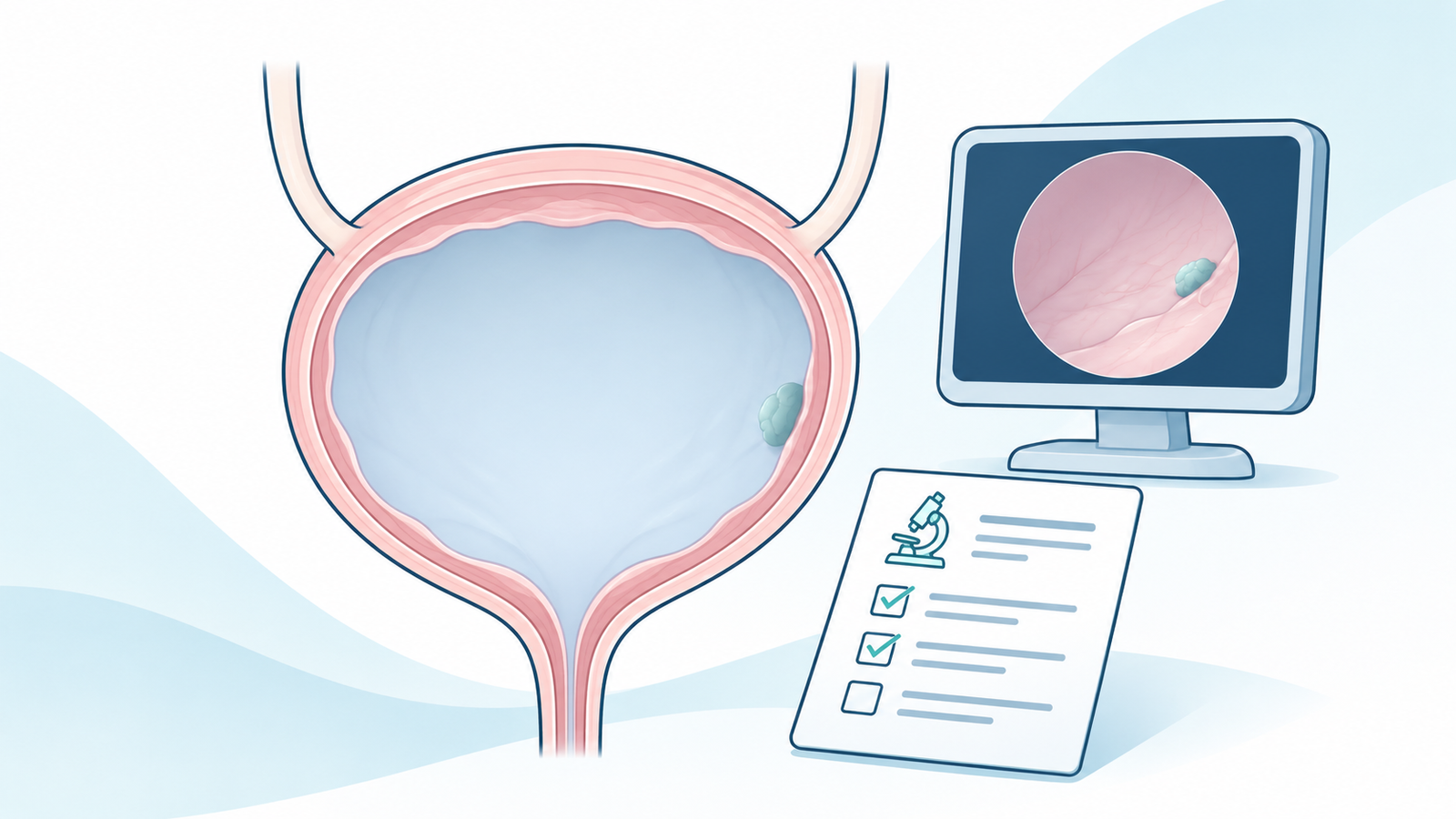
TURBT is a procedure performed through the urethra, the passage through which urine leaves the body. A telescope allows the surgeon to examine the bladder and remove or sample abnormal tissue. The tissue goes to a laboratory to establish the diagnosis and help assess how far a tumour extends into the bladder wall. TURBT can therefore be both an investigation and an initial treatment. It is not the same as removal of the whole bladder. BAUS information on bladder tumour resection.
When is TURBT recommended?
A review may be appropriate if a bladder abnormality has been identified on a scan or cystoscopy, a clinician has recommended TURBT, or you need to discuss an existing pathology result. The purpose is to understand what has been found and which next step is justified. A suspected tumour is not a complete diagnosis; the tissue result and other findings determine the treatment pathway.
Visible blood in the urine should be assessed even if it is painless or happens only once. It does not automatically mean cancer, but a normal-looking interval should not be used to dismiss it. NHS guidance on blood in the urine.
Preparing for TURBT
Please bring available scan images and reports, cystoscopy findings, previous bladder treatment records and a list of medicines and allergies. Tell the doctor about blood-thinning medicines and any previous anaesthetic problems. Do not stop prescribed medicines yourself. If surgery is recommended, you will receive individual instructions about preparation and medication management. NHS information on preparation and follow-up.
The consultation should leave you with an explanation of the proposed procedure, its purpose, relevant alternatives and the plan for reviewing results. Practical arrangements, including hospital assessment, expected stay and financial information, can then be clarified before proceeding.
What happens during the procedure?
TURBT is usually performed under general or spinal anaesthesia. The surgeon passes an instrument through the urethra, examines the bladder, removes or samples the abnormal tissue and controls bleeding. There is normally no external skin incision. The extent of removal depends on the tumour and the findings during the operation; the tissue is sent for laboratory examination.
Recovery after TURBT
A temporary urinary catheter may be needed after TURBT. Burning, urinary frequency or blood in the urine can occur during recovery. Risks include infection, significant bleeding and bladder injury. Your team will explain activity restrictions, catheter care if needed and when to seek help. Recovery varies with the amount of tissue treated and your general health. NHS information on TURBT recovery and risks.
Before discharge, confirm your catheter plan, activity advice, warning symptoms and results appointment. If a catheter is needed, see our guide to urinary catheter care alongside your own discharge instructions.
Pathology results and follow-up: what happens next?
The operation is one part of care. Pathology and other findings determine whether further resection, treatment placed inside the bladder, another treatment or ongoing surveillance is needed. A follow-up appointment to discuss the result is essential; removal of a visible tumour does not mean that further care is unnecessary. EAU guidance on TURBT and pathology.
When cancer is found, grade describes its cellular appearance and behaviour, while stage describes how deeply it has grown. Whether bladder muscle is represented in the specimen can affect the next decision. If repeat TURBT is indicated, it is commonly scheduled within two to six weeks; this is not required for every patient. The results discussion should explain why any further procedure, bladder treatment or surveillance is recommended.
Frequently asked questions about TURBT
Does a suspected bladder tumour always mean cancer?
No. Tissue examination helps establish what the abnormality is and guides the next steps.
Will TURBT be the only treatment I need?
That depends on the findings. Some people need another procedure or additional treatment, and follow-up remains important.
Will I need a catheter or overnight stay?
Possibly. The plan depends on the procedure, bleeding and your recovery. Ask about this during the preoperative discussion.
Can I bring results from another hospital?
Yes. Bring the original reports and available images. The doctor can advise whether further records or investigations are needed.
Is TURBT the same as TURP?
No. TURBT treats or samples a bladder tumour. TURP removes obstructing prostate tissue. The abbreviations describe different procedures.
Does TURBT remove the whole bladder?
No. It works on tissue inside the bladder through the urethra. Removal of the bladder is a different operation called cystectomy.
Why might a second TURBT be recommended?
Sometimes more tissue is needed to complete removal or clarify the stage. The reason should be explained using your operation and pathology findings.
Why is cystoscopy follow-up needed after removal?
Some bladder tumours can recur. Follow-up is tailored to the diagnosis and risk level, rather than stopping simply because the visible lesion was removed.
After a procedure, seek urgent medical advice for inability to pass urine, heavy bleeding or clots, fever, or worsening pain.
Private office · Personalised care
Consultation & Outpatient Procedures
Meet Dr. Amin Mir Sadeghi at his private practice within Medical Village Dubai for confidential, personalised urology care. Outpatient treatment options are discussed after an individual medical assessment.
Medical Village · Al Manara, Dubai
Clinic hours: Daily, 12:00–19:00, by prior appointment
Appointments & WhatsApp: +971 56 796 3993
All times are Dubai time.
Surgical care in Dubai
Hospitals for Urological Surgery
Dr. Amin Mir Sadeghi performs urological surgery at American Academy of Cosmetic Surgery Hospital and Trellis Hospital in Dubai. Contact Dr. Amin's team to discuss your procedure and arrange your appointment.
Surgical care with Dr. Amin · Dubai
Surgical care with Dr. Amin · Dubai
Appointments are arranged directly by Dr. Amin's team. The team will confirm the hospital and availability.