


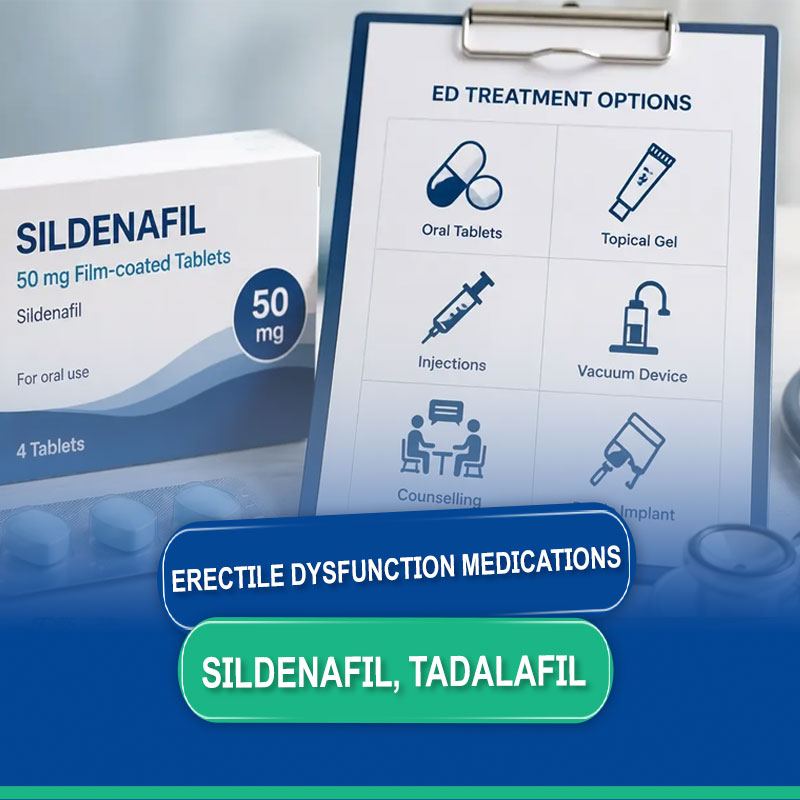
Oral medication is usually one of the first treatment options discussed for erectile dysfunction. For many men, tablets can be effective, convenient, and safe when they are used correctly under medical supervision. However, erectile dysfunction medication is not suitable for every patient, and it does not always solve the main cause of the problem.
For a complete overview of erectile dysfunction, its gradual progression, and when a man should see a urologist, read the related introductory article: Erectile Dysfunction: When Should You See a Urologist?
This article focuses specifically on oral medications for erectile dysfunction, especially sildenafil and tadalafil, how they are commonly used, safety precautions, and what options may be considered if tablets stop working or are not suitable.
What Are Oral Medications for Erectile Dysfunction?
The most commonly known oral medications for erectile dysfunction are sildenafil and tadalafil. Many patients recognize them by their brand names, Viagra and Cialis. These medications belong to a group called PDE5 inhibitors. They help improve the natural erection response by supporting blood flow to the penis during sexual stimulation.
It is important to understand that these medications do not automatically create an erection without sexual stimulation. They support the erection mechanism, but the patient still needs normal sexual arousal and appropriate timing of the medication.
How Are Sildenafil and Tadalafil Usually Taken?
In many cases, sildenafil or tadalafil may be taken before sexual intercourse. The exact timing, dose, and frequency should be decided by a doctor based on the patient’s health condition, medical history, other medications, and treatment goals.
Sildenafil is often used as an on-demand medication before sexual activity. Tadalafil can also be used on demand, but in some patients it may be prescribed as a once-daily low-dose treatment. Daily tadalafil may be considered when a patient has more frequent sexual activity, prefers more spontaneity, or has a medical indication where the doctor believes daily use is appropriate.
Patients should not increase the dose, combine different ED medications, or use tablets more frequently than advised, because this can increase the risk of side effects and complications.
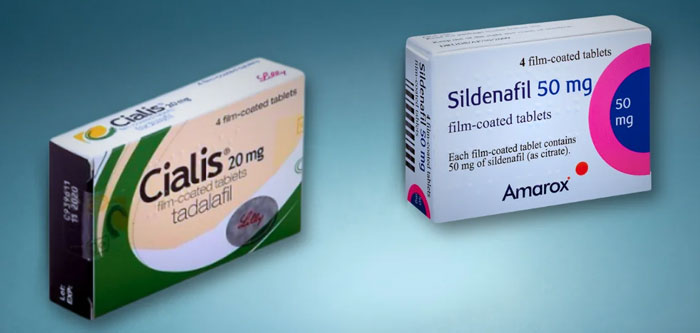
Sildenafil vs. Tadalafil: What Is the Difference?
Sildenafil and tadalafil can both help men with erectile dysfunction, but they are not exactly the same. One practical difference is duration of action. Sildenafil usually works for a shorter period, while tadalafil may provide a longer treatment window and may remain effective for up to around 36 hours in some patients.
| Medication | Common Use | Important Notes |
| Sildenafil | Usually taken on demand before sexual activity. | Shorter treatment window compared with tadalafil. Timing and dose should be guided by a doctor. |
| Tadalafil | Can be taken on demand or, in selected patients, as a once-daily low-dose treatment. | Longer duration; may allow more spontaneity. Not suitable for everyone. |
Who May Benefit from ED Tablets?
Oral medications may work well for many patients with mild to moderate erectile dysfunction. They may be especially helpful when the patient still has some natural erectile response but needs stronger or more reliable rigidity for sexual intercourse.
However, response to treatment can vary. Some men respond very well to the first medication. Others may need dose adjustment, a different medication, or further medical evaluation. In some patients, tablets may not work because the underlying cause is more advanced, such as significant vascular disease, severe diabetes-related damage, hormonal problems, nerve injury, or post-surgical changes.
Important Safety Warning: These Medications Are Not for Everyone
Even if sildenafil and tadalafil are easy to obtain in many places, they should not be used casually or without proper medical advice. This is especially important for patients who take heart medication, blood pressure medication, alpha-blockers, or medication for chest pain.
Patients who use nitrates, whether regularly or occasionally, must not use PDE5 inhibitors unless their treating physician has specifically reviewed the situation. Combining nitrates with erectile dysfunction medications can cause a dangerous drop in blood pressure and may lead to serious complications.
Patients with heart disease, recent chest pain, uncontrolled blood pressure, severe dizziness, fainting episodes, or complex medication lists should speak with a doctor before using any ED tablet. The goal is not only to improve erections, but to do so safely.
Do ED Tablets Treat the Main Cause of Erectile Dysfunction?
This is one of the most important points for patients to understand: oral ED medications usually provide temporary support. They may help achieve and maintain an erection for a specific period, but they do not necessarily treat the main cause of erectile dysfunction.
For example, if erectile dysfunction is related to diabetes, low testosterone, vascular disease, obesity, smoking, medication side effects, psychological stress, or pelvic surgery, the underlying problem still needs proper evaluation and management. This is why a urology consultation can be important even when medication seems to work at the beginning.
What If ED Medication Stops Working?
Some patients notice that ED tablets work well at first, but later become less effective. This can happen for different reasons. The underlying condition may have progressed, the medication may not be used correctly, testosterone may be low, blood sugar may be uncontrolled, or the patient may need a different treatment strategy.
If oral medication stops working, causes side effects, or is no longer preferred, the next step is not random dose escalation. The safer and more effective approach is a specialist evaluation. Depending on the patient, further options may include lifestyle and metabolic correction, hormone assessment, shockwave therapy, injection therapy, penile Doppler ultrasound, regenerative treatments in selected cases, vacuum devices, or surgical solutions such as penile implant surgery for severe erectile dysfunction.
When Should a Patient See a Urologist?
- ED medication no longer works as before.
- The patient needs higher doses to get the same result.
- The patient experiences side effects such as headache, flushing, dizziness, visual symptoms, muscle pain, or low blood pressure symptoms.
- The patient takes medication for heart disease, chest pain, blood pressure, or prostate symptoms.
- The patient does not want to depend on tablets before intercourse or every day.
- Erectile dysfunction is becoming more severe or affecting confidence and relationship quality.
A urologist can evaluate the medical cause of erectile dysfunction and help the patient choose a safe and realistic treatment plan instead of relying on trial and error.
Treatment Should Be Personalized
The best ED treatment is not always the most famous tablet or the highest dose. The best treatment is the one that matches the patient’s medical condition, safety profile, expectations, relationship pattern, and long-term sexual health goals.
Some patients may only need correct medication timing and dose adjustment. Others may need a full medical evaluation and additional treatment options. The key is to avoid unsafe self-treatment and to identify the cause of the problem early.
About Dr Amin
Dr Amin is a urologist with more than 10 years of experience in evaluating and treating erectile dysfunction and men’s sexual health concerns. His approach focuses on accurate diagnosis, safe treatment selection, and helping patients understand whether oral medication is enough or whether another treatment option may be more suitable.
Patients experiencing weak erection, reduced sexual performance, side effects from ED medication, or poor response to sildenafil or tadalafil can schedule a consultation for proper evaluation and a personalized treatment plan.
Erectile dysfunction medication can be helpful, but safe and successful treatment starts with the right diagnosis.
Explore specialist-guided medical treatment options for erectile dysfunction.
FAQ
1)Are sildenafil and tadalafil the same?
No. They are both PDE5 inhibitors used for erectile dysfunction, but they differ in timing, duration, dosing options, and how they fit different patient lifestyles.
2)Can tadalafil be taken every day?
In selected patients, tadalafil may be prescribed as a once-daily low-dose treatment. This should be decided by a doctor after reviewing the patient’s medical condition and medications.
3)Can ED tablets be taken with heart medication?
Some patients with heart conditions may use ED medication safely under medical supervision, but patients taking nitrates or medication for chest pain must be especially careful. Nitrates and PDE5 inhibitors can be a dangerous combination.
4)What should a patient do if Viagra or Cialis stops working?
The patient should not simply increase the dose without medical advice. A urologist can assess the cause, review correct use, check contributing medical factors, and discuss other treatment options.
5)Do ED tablets cure erectile dysfunction?
Usually, no. They can help achieve and maintain an erection temporarily, but they may not treat the underlying cause of erectile dysfunction.

Official hospital profile
Specialist Urologist at American Academy of Cosmetic Surgery Hospital
Dr. Seyed Amin Mir Sadeghi's official professional profile is published on the hospital website.
One Response