


Erectile dysfunction is not always caused by one single problem. In some men, it is related to blood flow. In others, it may be connected to diabetes, high blood pressure, hormonal imbalance, medication side effects, psychological stress, previous surgery, trauma, or a combination of several factors.
That is why the correct workup of erectile dysfunction is very important. The goal is not only to confirm that a man has difficulty with erection. The more important goal is to understand why it is happening and which treatment option is most suitable and safe for that patient.
For patients who want a general overview before reading about tests, the main article Erectile Dysfunction: When Should You See a Urologist? explains the common symptoms, when to seek medical advice, and why early urological assessment matters.
Why Investigation Is Important Before Treatment
Many patients start treatment with tablets such as sildenafil or tadalafil. These medications can be effective for many men, especially in mild to moderate erectile dysfunction. However, medication does not always explain the cause of the problem. If treatment is chosen without proper evaluation, an underlying medical issue may be missed.
A structured diagnostic workup can help identify whether erectile dysfunction is mainly vascular, hormonal, metabolic, neurologic, psychological, medication-related, or mixed. This information can guide the choice between lifestyle correction, oral medication, injection therapy, regenerative treatments, or penile implant surgery in more severe cases.
For more information about first-line medical treatment, patients can also read Oral Medications for Erectile Dysfunction.
Step 1: Medical and Sexual History
The first step in evaluating erectile dysfunction is a detailed medical and sexual history. This part is sometimes more important than any test because it helps the urologist understand the pattern of the problem.
During the consultation, the urologist may ask about:
- When the problem started and whether it was sudden or gradual
- Whether the erection is weak from the beginning or lost during intercourse
- Morning or night-time erections
- Sexual desire and libido
- Ejaculation, orgasm, and penile pain or curvature
- Diabetes, high blood pressure, cholesterol, heart disease, obesity, sleep problems, or previous pelvic surgery
- Medication use, including blood pressure medication, antidepressants, hormone treatments, pain medications, and recreational drugs
- Smoking, alcohol, stress, anxiety, relationship factors, and lifestyle habits
This history helps separate possible physical causes from psychological or mixed causes. It also helps the doctor decide which tests are necessary and which tests may not be needed.
Step 2: Physical Examination
The physical examination is usually focused and respectful. It may include assessment of general body habitus, blood pressure, signs of hormonal imbalance, genital examination, testicular size, penile plaques or curvature, and other findings that may suggest Peyronie’s disease, hypogonadism, vascular disease, or neurologic problems.
The purpose of the examination is not only to check the penis. It is also to identify health conditions that may be connected to erectile dysfunction.
Step 3: Basic Blood Tests for Erectile Dysfunction
Blood tests are commonly requested in the workup of erectile dysfunction because ED can sometimes be the first visible sign of a general health problem. The exact tests depend on the patient’s age, history, symptoms, and risk factors.
Common blood tests may include:
| Test | Why it may be requested |
| Fasting blood glucose or HbA1c | To assess diabetes or poor blood sugar control, which can damage blood vessels and nerves involved in erection. |
| Lipid profile | To evaluate cholesterol and cardiovascular risk, which may affect penile blood flow. |
| Kidney and liver function tests | To assess general metabolic health and medication safety. |
| Complete blood count | To screen for anemia, infection, or other systemic issues when clinically indicated. |
| Urine test | May be used in selected patients to check diabetes-related findings, infection, or kidney-related concerns. |
These tests do not directly measure erection strength, but they help identify medical conditions that can reduce erectile function or affect the safety of treatment.
Step 4: Hormonal Tests for Erectile Dysfunction
Hormonal evaluation is an important part of ED workup, especially when the patient has reduced sexual desire, fatigue, low energy, reduced morning erections, infertility concerns, small testes, obesity, or symptoms suggestive of testosterone deficiency.
The most important hormonal test is usually morning total testosterone. Testosterone levels change during the day, so the blood sample is usually more meaningful when taken in the morning. In selected patients, the doctor may also request repeat testosterone testing or additional hormone tests.
| Hormonal test | Possible purpose |
| Morning total testosterone | Initial assessment for testosterone deficiency, especially when symptoms suggest low testosterone. |
| Free testosterone or SHBG | May help interpret testosterone status in selected patients, especially when total testosterone is borderline or SHBG may be abnormal. |
| LH and FSH | Help distinguish primary testicular causes from pituitary or central causes of low testosterone. |
| Prolactin | May be requested when low libido, low testosterone, infertility, or pituitary-related symptoms are suspected. |
| TSH / thyroid function | May be considered when symptoms suggest thyroid disease or unexplained sexual dysfunction. |
| Estradiol | May be considered in selected patients, especially with obesity, gynecomastia, or complex hormonal findings. |
| Important patient message Low testosterone is not the cause of every erection problem. Many men with erectile dysfunction have normal testosterone levels. The purpose of hormonal testing is to identify the right patient, not to give hormone treatment to everyone. |
Step 5: Cardiovascular Risk Assessment
Erectile dysfunction and cardiovascular health are closely connected. The penile arteries are small, and vascular disease may affect erection before a patient develops obvious heart symptoms. For this reason, ED can sometimes be an early warning sign of vascular disease.
In patients with diabetes, high blood pressure, high cholesterol, smoking history, obesity, chest pain, shortness of breath, or reduced exercise tolerance, the urologist may recommend cardiovascular risk assessment or referral to a cardiologist before certain treatments or before resuming intense sexual activity.
Step 6: Penile Color Doppler Ultrasound
Penile color Doppler ultrasound is one of the most useful investigations when the urologist needs to evaluate penile blood flow. It is not required for every patient with erectile dysfunction, but it can be very helpful in selected cases.
This test may be considered when:
- ED does not respond well to oral medication
- The patient has moderate to severe ED and the cause is unclear
- There is suspicion of vascular erectile dysfunction
- There is a history of penile trauma, pelvic trauma, priapism, or pelvic surgery
- There is penile curvature or suspected Peyronie’s disease associated with ED
- The patient is considering advanced treatments and needs better diagnostic clarity
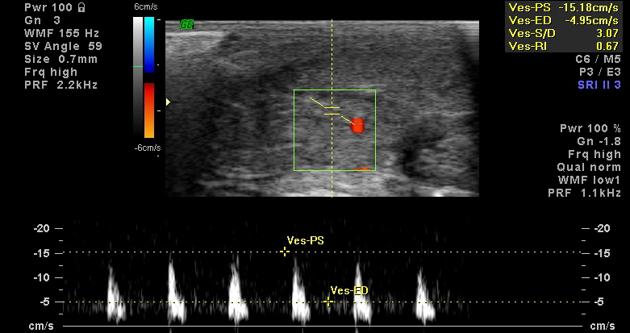
During the test, an ultrasound probe is used to assess the penile arteries and erectile tissue. In many protocols, a medication is injected into the erectile tissue to create an erection-like response. The ultrasound then measures arterial inflow and checks whether blood is being trapped properly inside the penis.
The results can help detect arterial insufficiency, veno-occlusive dysfunction often called venous leak, mixed vascular patterns, or normal vascular function. This information can guide treatment planning and patient counseling.
If tablets are not effective, patients may also benefit from reading Alprostadil, ED Injections, and Regenerative Treatments, which explains non-surgical options after oral medication.
What Does Penile Doppler Measure?
The exact report format may vary, but penile Doppler ultrasound commonly evaluates:
- Peak systolic velocity, which reflects arterial inflow
- End-diastolic velocity, which may suggest difficulty trapping blood when persistently elevated
- Resistive index, which helps interpret veno-occlusive function
- Response to injection, erection quality, and rigidity during the test
- Penile plaques, fibrosis, curvature, or structural abnormalities when present
Because penile Doppler ultrasound is technique-dependent, it should be performed and interpreted by an experienced clinician or team familiar with erectile dysfunction evaluation.
Step 7: Other Tests That May Be Needed in Selected Patients
Most patients do not need advanced testing beyond history, examination, blood tests, hormonal assessment, and sometimes penile Doppler ultrasound. However, in selected cases, additional investigations may be considered.
| Additional investigation | When it may be considered |
| Nocturnal penile tumescence testing | Occasionally used to help distinguish psychogenic from organic ED, although it is less commonly needed in routine practice. |
| Neurologic assessment or penile biothesiometry | May be considered when neuropathy or nerve-related ED is suspected, especially in diabetes or after pelvic surgery. |
| Cavernosometry or cavernosography | Rarely used today, but may be considered in selected cases of suspected venous leak or trauma-related vascular problems. |
| Pelvic or vascular imaging | Reserved for selected trauma or vascular reconstruction cases. |
| Psychosexual assessment | Useful when anxiety, depression, relationship stress, performance anxiety, or mixed psychological factors are important. |
| Medication review | Essential when ED may be related to antidepressants, blood pressure medications, hormonal drugs, opioids, or other medications. |
How Test Results Guide Treatment
The purpose of ED testing is not to create unnecessary investigations. The purpose is to choose the right treatment safely and logically.
For example:
- If diabetes or cholesterol is poorly controlled, lifestyle and metabolic optimization may be part of treatment.
- If testosterone is low and symptoms match, hormonal management may be considered after proper confirmation and safety checks.
- If penile Doppler shows vascular insufficiency, the patient may need a different treatment pathway than someone with psychogenic ED.
- If ED is severe and refractory to medication or injection therapy, penile implant surgery may be discussed as a more definitive option.
For patients with severe or refractory ED, the article Penile Implant Surgery for Severe Erectile Dysfunction explains when penile prosthesis surgery may be considered. Patients who are already comparing options may also read Penile Implant Surgery and Cost: A Complete Guide.
Does Every Patient Need All These Tests?
No. A good ED workup should be personalized. Some patients only need a focused consultation, examination, and basic blood tests. Others may need hormonal evaluation, cardiovascular assessment, or penile color Doppler ultrasound.
The best approach is to avoid both extremes: treating erectile dysfunction blindly without investigation, and ordering unnecessary tests for every patient. The right evaluation depends on the patient’s symptoms, age, risk factors, previous treatments, and goals.
When Should You Book an ED Evaluation?
A man should consider medical evaluation if erection problems are repeated, progressive, sudden after trauma, associated with reduced libido, or not responding to usual treatment. Evaluation is also important when tablets cause side effects, when medication is unsafe because of heart or blood pressure drugs, or when the patient wants a long-term treatment plan rather than temporary help.
Consultation with Dr Amin
Dr Amin is a urologist with more than 10 years of experience in evaluating and treating erectile dysfunction and men’s sexual health conditions. His approach focuses on identifying the underlying cause of ED, explaining the available treatment options clearly, and helping each patient choose a safe and realistic plan.
Patients with weak erection, poor response to ED medication, suspected hormonal problems, penile trauma, diabetes-related ED, or severe erectile dysfunction can schedule a consultation for proper medical evaluation and personalized treatment planning.
Erectile dysfunction is treatable, but the best treatment starts with the right diagnosis.
FAQ
1)What blood tests are usually needed for erectile dysfunction?
Common blood tests may include fasting blood glucose or HbA1c, lipid profile, kidney and liver function tests, and sometimes complete blood count or urine testing. The exact tests depend on the patient’s history and risk factors.
2)Does every man with ED need a testosterone test?
Many guidelines recommend measuring morning testosterone in men with erectile dysfunction, especially when symptoms suggest low testosterone. Additional hormonal tests may be needed if testosterone is low or borderline.
3)What is penile color Doppler ultrasound?
Penile color Doppler ultrasound is an imaging test that evaluates penile blood flow. It can help identify arterial insufficiency, veno-occlusive dysfunction, or structural problems in selected patients with erectile dysfunction.
4)Is penile Doppler ultrasound needed for every ED patient?
No. It is usually reserved for selected patients, such as men who do not respond to oral medication, have suspected vascular ED, have a history of trauma, or are considering advanced treatment options.
5)Can erectile dysfunction be a sign of heart disease?
Yes. ED can sometimes be an early sign of vascular disease, especially in men with diabetes, hypertension, high cholesterol, obesity, or smoking history. Cardiovascular risk assessment may be important in selected patients.
6)What happens if all ED tests are normal?
Normal tests do not mean the problem is imaginary. ED can still be related to performance anxiety, stress, relationship factors, medication effects, subtle vascular issues, or mixed causes. Treatment can still be planned based on symptoms and goals.
7)Can hormonal treatment cure erectile dysfunction?
Hormonal treatment may help selected patients with confirmed testosterone deficiency and compatible symptoms. It is not suitable for every patient and should only be considered after proper medical evaluation.
8)Do I need ED workup before penile implant surgery?
Patients considering penile implant surgery usually need a careful medical and surgical assessment. The exact tests depend on the patient’s health, severity of ED, previous treatments, and surgical planning needs.

Official hospital profile
Specialist Urologist at American Academy of Cosmetic Surgery Hospital
Dr. Seyed Amin Mir Sadeghi's official professional profile is published on the hospital website.