


Bladder stones are hard masses that develop when minerals and other substances in concentrated urine form crystals inside the bladder. They most commonly occur when the bladder cannot empty completely, allowing urine to remain in the bladder for an extended period.
Small bladder stones may cause few or no symptoms and can sometimes pass naturally during urination. Larger stones, however, may irritate the bladder lining or interfere with the flow of urine. This can result in lower abdominal pain, painful urination, frequent urination, blood in the urine and difficulty emptying the bladder.
Although bladder stones are not usually life-threatening, untreated stones can lead to recurrent urinary tract infections, persistent urinary symptoms and urinary blockage. Treating the stone as well as the underlying cause can help reduce the risk of recurrence.
What Are Bladder Stones?
Bladder stones, also known as bladder calculi, are solid mineral deposits that form inside the urinary bladder. The bladder stores urine until it is released from the body through the urethra.
When urine remains in the bladder instead of being completely emptied, it becomes more concentrated. Minerals and other substances in the urine can then crystallize and gradually form a hard mass.
Bladder stones are different from kidney stones because they develop in different parts of the urinary system. However, a small kidney stone can sometimes travel through the ureter and reach the bladder. If it remains there and does not pass out of the body, it may continue to grow.
Some bladder stones are very small and may be passed without treatment. Others can become large enough to cause significant urinary symptoms or obstruct the bladder outlet.

Causes
The most common reason for bladder stone formation is incomplete emptying of the bladder. When urine stays in the bladder, its mineral concentration increases, making crystal formation more likely.
Several conditions can interfere with normal bladder emptying or otherwise increase the risk of bladder stones.
-Enlarged Prostate
An enlarged prostate, medically known as benign prostatic hyperplasia (BPH), is one of the important risk factors for bladder stones in older men.
As the prostate enlarges, it can narrow the urethra and make it more difficult for urine to leave the bladder. The bladder may have to work harder to push urine through the narrowed passage, and some urine can remain behind after urination.
Over time, this residual urine can contribute to the formation of bladder stones.
-Neurogenic Bladder
The bladder depends on signals between the nervous system and bladder muscles to store and release urine properly. Damage to the nerves that control the bladder can interfere with this process.
Conditions such as spinal cord injury, stroke, Parkinson’s disease, diabetes and certain neurological disorders can affect bladder function. When the bladder cannot contract or empty normally, urine may remain inside it and increase the risk of stone formation.
-Bladder Diverticula
A bladder diverticulum is a pouch that develops in the bladder wall. Urine can collect inside these pockets and may not be completely emptied during urination.
Bladder diverticula may be present from birth or develop later because of conditions such as bladder outlet obstruction or an enlarged prostate.
-Urinary Tract Infections and Inflammation
Some urinary tract infections can contribute to the development of bladder stones. Inflammation of the bladder, including inflammation associated with certain infections or previous radiation treatment to the pelvic area, may also increase the risk.
-Urinary Catheters and Other Medical Devices
Long-term use of urinary catheters can increase the risk of bladder stones. Mineral crystals may develop around the catheter and gradually become a stone.
Other objects or medical devices inside the urinary tract, such as certain urinary stents, can also provide a surface on which mineral deposits accumulate.
-Kidney Stones
Kidney stones and bladder stones are not the same condition. However, a small kidney stone can travel down the ureter and enter the bladder.
Most stones that reach the bladder can eventually leave the body through urination. In some cases, however, a stone can remain in the bladder and grow over time.
-Previous Bladder Surgery
Certain bladder procedures, including bladder augmentation surgery, can alter the way urine moves or is stored. As a result, some patients may have a higher risk of urine retention and bladder stone formation.
Who Is More Likely to Develop Bladder Stones?
Bladder stones can occur in anyone, including women and children, but they are more common in men, particularly older men.
The increased risk in older men is partly related to the higher prevalence of prostate enlargement with age. Other factors that can increase the risk include:
- Incomplete bladder emptying
- Enlarged prostate
- Nerve damage affecting bladder function
- Recurrent urinary tract infections
- Previous bladder surgery
- Long-term urinary catheter use
- Certain bladder abnormalities
- A kidney stone that enters the bladder but does not pass out
Symptoms of Bladder Stones
Some people with bladder stones have no symptoms, particularly when the stones are small. Symptoms are more likely to occur when a stone irritates the bladder wall or interferes with the normal flow of urine.
Common bladder stone symptoms include:
- Pain in the lower abdomen
- Pain or burning during urination
- Frequent urination
- A sudden or persistent urge to urinate
- Difficulty starting urination
- A weak or interrupted urine stream
- Blood in the urine
- Cloudy or unusually dark urine
- Recurrent urinary tract infections
In men, pain may sometimes be felt in the penis or testicles as well as the lower abdomen.
A bladder stone can occasionally become lodged near the bladder outlet and cause significant difficulty passing urine. Complete inability to urinate requires urgent medical assessment.
Can Bladder Stones Cause Urinary Tract Infections?
Yes. Bladder stones can increase the risk of urinary tract infections because they may irritate the bladder and interfere with normal urine drainage.
A person with a urinary tract infection may experience symptoms such as burning during urination, frequent urination, cloudy or foul-smelling urine and lower abdominal discomfort.
Recurrent urinary tract infections may also occur when an underlying bladder stone remains untreated.
Diagnosis
A urologist usually begins the evaluation by reviewing the patient’s symptoms and medical history and performing a physical examination. Additional tests can then be used to identify the stone and determine its size, location and possible cause.
-Urinalysis
A urine test can detect blood, signs of infection and crystals or other substances that may provide clues about stone formation.
If a urinary tract infection is suspected, the urine may also be tested for bacteria.
-Ultrasound
A urinary tract ultrasound uses sound waves to create images of the bladder and surrounding structures. It can help identify bladder stones and may also show whether urine is remaining in the bladder after urination.
-CT Scan
A CT scan provides detailed images of the urinary tract and can detect small stones that may be difficult to identify with other imaging methods.
CT may also help doctors investigate other possible causes of urinary symptoms.
-X-Ray
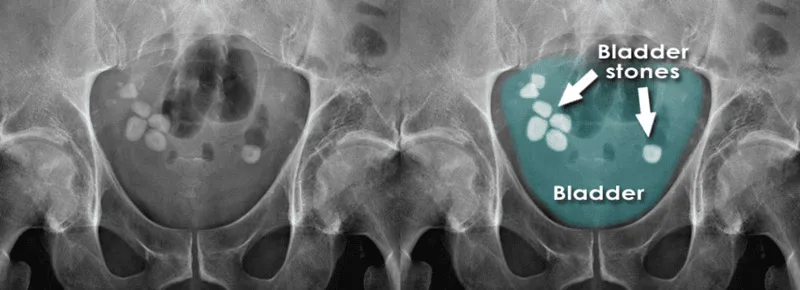
Some bladder stones can be seen on an X-ray of the urinary tract. However, not all types of stones are visible on standard X-rays, so another imaging test may be needed.
-Cystoscopy
During a cystoscopy, a urologist passes a thin instrument with a camera through the urethra into the bladder. This allows the doctor to directly examine the inside of the bladder and identify stones.
Cystoscopy can sometimes be used both to diagnose and treat bladder stones.
Bladder Stones Treatment
The appropriate treatment depends on factors such as the size and location of the stone, the patient’s symptoms and the reason the stone developed.
Treating the underlying problem is particularly important because simply removing a stone may not prevent another one from forming.
-Passing a Small Bladder Stone Naturally
Very small stones may pass during urination without requiring a procedure. Drinking an adequate amount of fluid may help facilitate the passage of a small stone in some cases.
However, increasing fluid intake does not always solve the problem. If the bladder cannot empty properly because of an enlarged prostate, nerve dysfunction or another obstruction, additional fluid may simply increase the amount of urine remaining in the bladder.
For this reason, patients should not rely on increased water intake as a substitute for medical evaluation.
-Cystolitholapaxy
Most bladder stones that require treatment can be removed using a minimally invasive procedure called cystolitholapaxy.
During the procedure, a cystoscope is passed through the urethra into the bladder. Once the stone is located, the urologist uses an appropriate energy source, such as a laser or another stone-fragmenting device, to break it into smaller pieces.
The fragments are then removed or flushed from the bladder.
Cystolitholapaxy avoids the need for a large surgical incision and is commonly used for many bladder stones.
-Surgical Removal
Very large or particularly hard bladder stones may require surgical removal.
In some situations, open or other surgical approaches may be considered when a stone cannot be safely or effectively treated through the urethra.
If the stone has developed because of a significant bladder outlet obstruction, the urologist may also need to treat the underlying obstruction.
-Treating the Underlying Cause
Removing the bladder stone is only part of treatment when another condition is responsible for its formation.
For example, if an enlarged prostate is preventing complete bladder emptying, treatment of the prostate may be necessary to improve urine flow and reduce the risk of future stones.
Similarly, patients with neurogenic bladder, recurrent infections or another underlying urinary condition may require specific treatment to address the cause.
Can Bladder Stones Be Dissolved With Medication?
In most cases, bladder stones cannot be quickly dissolved with medication.
Whether a stone can dissolve depends on its chemical composition, and dissolution is not an effective option for many bladder stones. For this reason, stones that are unlikely to pass naturally often need to be removed.
A urologist can determine the most appropriate approach based on the stone and the underlying condition.
What Happens If Bladder Stones Are Left Untreated?
Small bladder stones may sometimes pass without causing significant problems. However, a stone that remains in the bladder can continue to grow and cause complications.
Potential problems include:
- Persistent bladder pain
- Frequent or difficult urination
- Blood in the urine
- Recurrent urinary tract infections
- Urinary obstruction
- Chronic bladder symptoms
- Difficulty completely emptying the bladder
A stone that becomes lodged at the bladder outlet can interfere with the passage of urine and, in severe cases, cause an inability to urinate.
How to Prevent Bladder Stones
Not every bladder stone can be prevented, particularly when it is associated with an underlying medical condition. However, several measures may help reduce the risk.
-Drink Enough Fluids
Adequate fluid intake helps dilute minerals in the urine and may reduce the concentration of substances that contribute to stone formation.
The amount of fluid a person needs varies according to factors such as age, body size, activity level and overall health. People with certain medical conditions may also have specific fluid restrictions, so individual advice from a healthcare professional is appropriate.
-Treat Urinary Problems Early
Conditions that interfere with bladder emptying should be evaluated and treated appropriately.
For example, men with symptoms of an enlarged prostate should seek medical evaluation rather than allowing persistent urinary symptoms to continue untreated.
Treating urinary tract infections and other bladder conditions may also help reduce the risk of stone formation.
-Address Recurrent Bladder Stones
If bladder stones return after treatment, the underlying cause should be investigated. Simply removing repeated stones without addressing the reason they form may not prevent recurrence.
When Should You See a Urologist?
You should consider seeing a urologist if you experience persistent urinary symptoms such as painful urination, blood in the urine, difficulty starting or maintaining your urine stream, frequent urination or recurrent urinary tract infections.
Medical evaluation is especially important if you have an enlarged prostate, a neurological condition affecting bladder function, a history of bladder surgery or a urinary catheter.
Seek urgent medical care if you are unable to urinate or develop severe, worsening pain associated with urinary symptoms.
Bladder Stones vs. Kidney Stones
Although bladder stones and kidney stones are both mineral deposits within the urinary system, they develop in different locations.
Kidney stones form inside the kidneys and may travel through the ureters toward the bladder. Bladder stones develop inside the bladder, usually because urine remains there and becomes concentrated.
The symptoms and treatment can also differ depending on the stone’s location, size and cause.
Frequently Asked Questions About Bladder Stones
1)Can a bladder stone pass on its own?
Very small bladder stones may pass naturally during urination. However, many bladder stones develop because the bladder cannot empty completely, so simply drinking more water may not be enough to solve the problem.
2)Are bladder stones painful?
They can be. Some small stones cause no symptoms, while larger stones may irritate the bladder and cause lower abdominal pain, painful urination or discomfort in other parts of the urinary tract.
3)Can bladder stones cause blood in the urine?
Yes. Irritation of the bladder lining by a stone can cause blood to appear in the urine. Blood in the urine should be medically evaluated because it can have several possible causes.
4)Are bladder stones more common in men?
Yes. Bladder stones are more common in men, particularly older men. One important reason is the increased likelihood of prostate enlargement, which can interfere with bladder emptying.
5)Can an enlarged prostate cause bladder stones?
Yes. An enlarged prostate can narrow the urethra and make it difficult to empty the bladder completely. Urine that remains in the bladder can become concentrated and contribute to stone formation.
6)What is the treatment for bladder stones?
Treatment depends on the size and location of the stone and its underlying cause. Small stones may sometimes pass naturally, while stones that do not pass may need to be fragmented and removed through a procedure such as cystolitholapaxy. Large stones may require surgery.
7)Can bladder stones come back after treatment?
Yes. Recurrence is possible, particularly if the underlying cause remains untreated. Managing conditions such as prostate enlargement, bladder dysfunction or recurrent urinary infections can help reduce the risk of developing additional stones.
8)Is bladder stone removal a major surgery?
Not necessarily. Many bladder stones can be treated through the urethra using minimally invasive techniques. During cystolitholapaxy, the stone is fragmented and the pieces are removed from the bladder. The appropriate technique depends on the individual patient’s condition and the characteristics of the stone.
Conclusion
Bladder stones develop when minerals in concentrated urine form hard deposits inside the bladder. Incomplete bladder emptying is one of the most common factors behind their formation, with conditions such as an enlarged prostate and neurological bladder dysfunction playing an important role.
While small stones may sometimes pass naturally, persistent or larger stones can cause pain, urinary difficulties, bleeding and recurrent infections. Accurate diagnosis allows a urologist to determine the size and location of the stone and identify the reason it developed.
Treatment may involve observation for very small stones, minimally invasive stone fragmentation and removal, or surgery for larger or difficult-to-treat stones. Addressing the underlying cause is also essential to reduce the possibility of recurrence.
Private office · Personalised care
Consultation & Outpatient Procedures
Meet Dr. Amin Mir Sadeghi at his private practice within Medical Village Dubai for confidential, personalised urology care. Outpatient treatment options are discussed after an individual medical assessment.
Medical Village · Al Manara, Dubai
Clinic hours: Daily, 12:00–19:00, by prior appointment
Appointments & WhatsApp: +971 56 796 3993
All times are Dubai time.
Surgical care in Dubai
Hospitals for Urological Surgery
Dr. Amin Mir Sadeghi performs urological surgery at American Academy of Cosmetic Surgery Hospital and Trellis Hospital in Dubai. Contact Dr. Amin's team to discuss your procedure and arrange your appointment.
Surgical care with Dr. Amin · Dubai
Surgical care with Dr. Amin · Dubai
Appointments are arranged directly by Dr. Amin's team. The team will confirm the hospital and availability.