


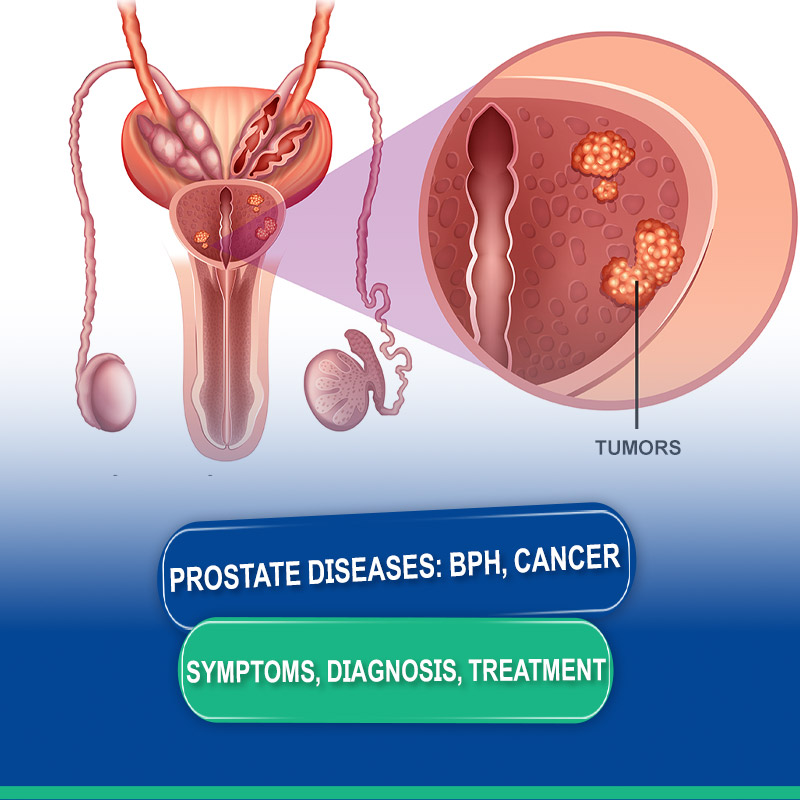
Prostate diseases can cause urinary, sexual, and quality-of-life problems. The same symptom, such as frequent urination or weak urine flow, may be related to benign prostate enlargement, prostate cancer, urinary infection, bladder dysfunction, or a previous prostate procedure. For this reason, proper diagnosis is essential before choosing treatment.
The two major prostate conditions discussed in the website content are benign prostatic hyperplasia (BPH) and prostate cancer. BPH is a common age-related enlargement of the prostate and is not cancer. Prostate cancer is an abnormal malignant growth in the prostate and may be slow-growing or aggressive.
Disease 1: Benign prostatic hyperplasia (BPH)
BPH is a non-cancerous enlargement of the prostate. It usually becomes more common with age. Because the prostate surrounds the urethra, enlargement can press on the urine channel and cause urinary symptoms.
Common BPH symptoms include weak stream, interrupted urine flow, difficulty starting urination, straining, frequent urination, urgent urination, night-time urination, and incomplete bladder emptying.
Treatment may include monitoring, medication, catheterization in urinary retention, Rezum water vapor therapy, TURP, TUIP, laser surgery, open prostatectomy, or other methods based on the size of the prostate and severity of obstruction.

Disease 2: Prostate cancer
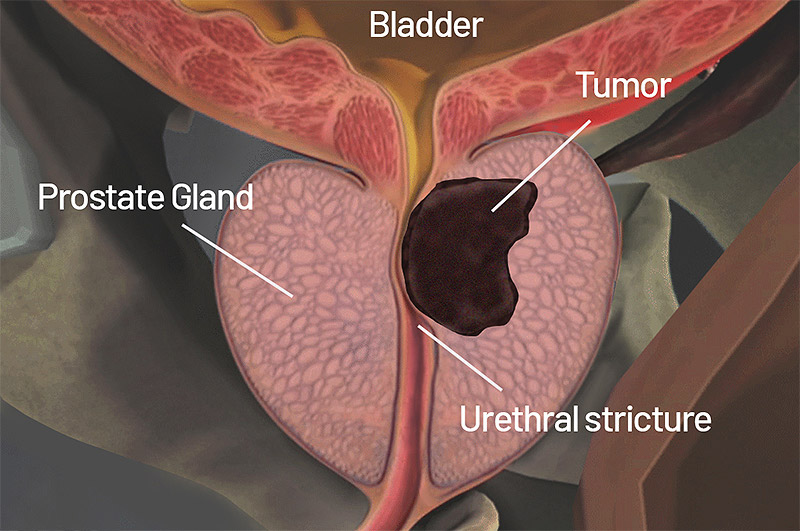
Prostate cancer is described on the website as an abnormal malignant growth in the prostate. It is one of the common cancers in men and may spread to other parts of the body.
The website classifies prostate cancer broadly into non-aggressive or slow-growing disease and aggressive or fast-growing disease. Non-aggressive disease may be monitored in selected cases. Aggressive disease may need active treatment.
Symptoms that may need prostate evaluation
- Frequent urination.
- Weak or slow urine stream.
- Painful urination or burning.
- Blood in urine.
- Blood in semen.
- Erectile dysfunction.
- Weakness or numbness in the legs in advanced disease situations.
- Loss of bladder or bowel control if cancer spreads and compresses the spinal cord.
- Urinary retention or inability to pass urine.
Diagnosis and workup
Digital rectal examination can help assess prostate size, borders, and firmness.
PSA blood testing measures prostate-specific antigen and can help the doctor evaluate the possibility of prostate cancer.
Urine testing can help identify infection or other urinary problems.
Ultrasound, MRI, or other imaging may be used when indicated.
Biopsy is used when examination or PSA suggests possible cancer; it helps determine whether cancer cells are present and how aggressive they appear.
Gleason score is described as a way to classify the grade of prostate cancer cells.
Bone scan, CT scan, and sometimes PET scan may be needed before radical prostate surgery depending on the clinical situation.
Treatment options mentioned across the website
- Observation and regular follow-up for selected mild or non-aggressive cases.
- Medication for BPH symptoms or for controlling prostate-related urinary problems.
- Catheterization for urinary retention.
- Rezum water vapor treatment for suitable BPH patients.
- TURP or prostate shaving for urinary obstruction due to BPH.
- TUIP for some smaller prostates.
- Laser surgery for selected patients.
- Open prostatectomy for very large benign prostates or specific surgical situations.
- Laparoscopic or robotic prostatectomy in selected surgical contexts.
- Radical prostatectomy for prostate cancer limited to the prostate.
- Radiation therapy, hormone therapy, chemotherapy, cryotherapy, radiosurgery, and immunotherapy for selected prostate cancer cases.
- Artificial urinary sphincter surgery for selected men with significant urinary incontinence without urethral injury.
How to position this page in the website
This should be a top-level educational page that links to all detailed prostate treatment pages.
Use a simple patient pathway: symptom -> evaluation -> diagnosis -> treatment options -> follow-up.
Use internal links to Rezum, TURP, radical prostatectomy, prostate surgery complications, and urinary incontinence treatment.
FAQ
1)Are all prostate problems cancer?
No. BPH is a benign condition and is not prostate cancer.
2)Can prostate cancer cause urinary symptoms?
Yes. Advanced prostate cancer may cause urinary symptoms, but urinary symptoms can also be caused by BPH and other conditions.
3)How is prostate cancer diagnosed? PSA, digital rectal examination, imaging, and biopsy may be used based on the patient’s findings.
4)Can BPH be treated without surgery?
Yes. Monitoring, medication, and minimally invasive methods may be suitable for selected patients.
5)When is radical prostatectomy considered?
The website describes radical prostatectomy as a surgery for prostate cancer, especially when cancer is limited to the prostate.
Conclusion
If you have urinary symptoms, abnormal PSA, prostate enlargement, or concerns about prostate cancer, a urologic consultation can help identify the cause and guide the right treatment pathway.

Official hospital profile
Specialist Urologist at American Academy of Cosmetic Surgery Hospital
Dr. Seyed Amin Mir Sadeghi's official professional profile is published on the hospital website.