


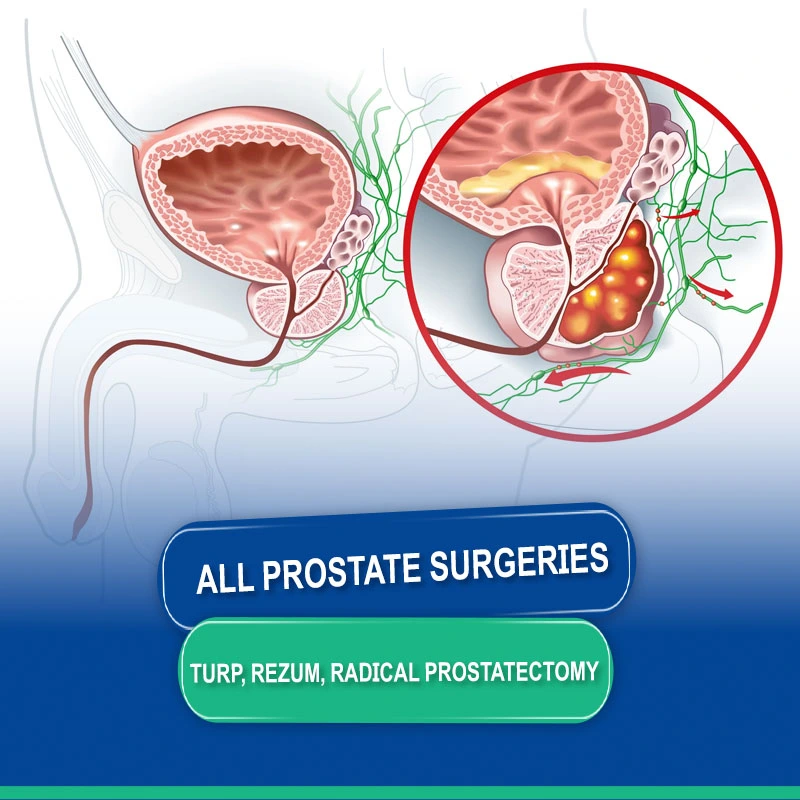
Prostate surgery is not one single operation. Different procedures are used for different prostate problems. Some surgeries are performed to improve urine flow in men with benign prostate enlargement. Others, such as radical prostatectomy, are performed to remove the prostate in selected patients with prostate cancer.
The right surgery depends on the reason for treatment, the size of the prostate, the severity of urinary obstruction, previous response to medication, general health, anesthesia risk, and the patient’s priorities regarding recovery, urinary control, sexual function, and fertility.
When prostate surgery may be considered
Prostate surgery may be considered when medications, lifestyle changes, or minimally invasive treatments are not sufficient.
It may also be considered when the patient cannot urinate, has severe obstruction, has blood in urine, has bladder stones, has recurrent urinary tract infections, or has kidney injury related to urinary obstruction.
For prostate cancer, surgery may be considered when the disease is suitable for surgical removal, especially when cancer is limited to the prostate.
1)Rezum water vapor therapy
Rezum is described on the website as a minimally invasive, outpatient, non-surgical treatment for BPH. It uses water vapor delivered through the urethra to reduce enlarged prostate tissue.
It does not require an external incision and is usually described as not needing general anesthesia. Patients may need a urinary catheter for several days until swelling decreases.
Rezum may be suitable for selected patients with small to medium prostate size and concern about preserving sexual function, but final suitability must be assessed by a urologist.
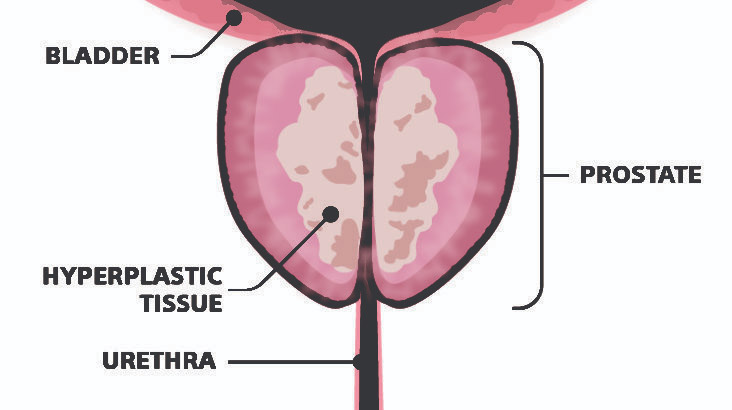
2)TURP / prostate shaving / transurethral resection
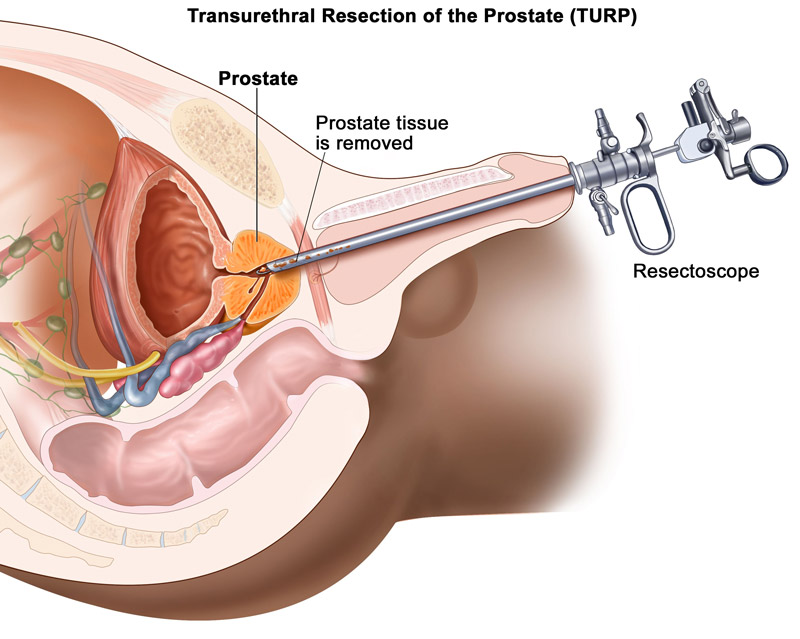
TURP is described as one of the older and effective operations for BPH. A resectoscope is passed through the urethra to remove the prostate tissue that blocks urine flow.
The website also uses the term prostate shaving. In this technique, the surgeon removes or shaves part of the enlarged prostate through the urinary passage. It usually requires anesthesia and catheter placement after surgery.
TURP is commonly used when urinary symptoms are significant and medication has not worked, especially when the prostate is not extremely large.
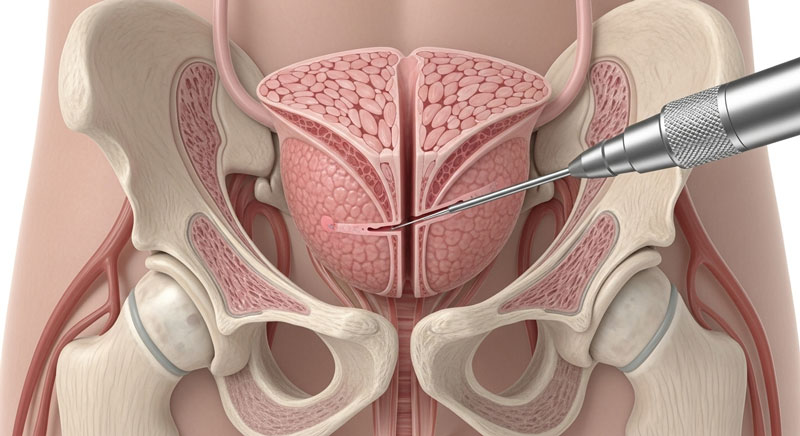
3)TUIP
TUIP is described as a transurethral incision procedure. Unlike TURP, tissue is not removed. Small cuts are made in the prostate to reduce pressure on the urethra.
The website content suggests this may be used in some patients with smaller prostates and may have a lower risk of retrograde ejaculation than TURP, although it may need repetition.
4)Laser prostate surgery
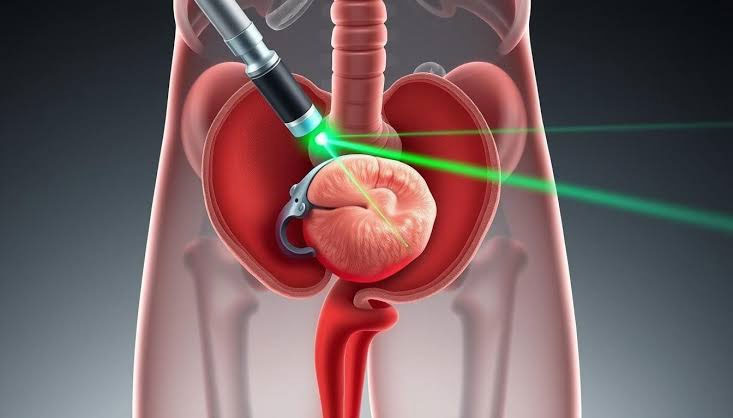
Laser treatment is mentioned as a method to remove or reduce extra prostate tissue. It may improve symptoms and urine flow in selected patients.
The website also notes that laser treatment may not be effective for very large prostates.
5)Open prostatectomy for benign enlargement
Open prostate surgery may be recommended when the prostate is very large, when disease complications are severe, or when the bladder needs repair. The website describes it as a more invasive approach with a longer recovery period.
For very large benign prostates, the central enlarged part of the prostate may be removed while the outer peripheral part and capsule remain. The operation may require bladder opening, catheter placement, and more postoperative care.
6)Laparoscopic or robotic prostatectomy
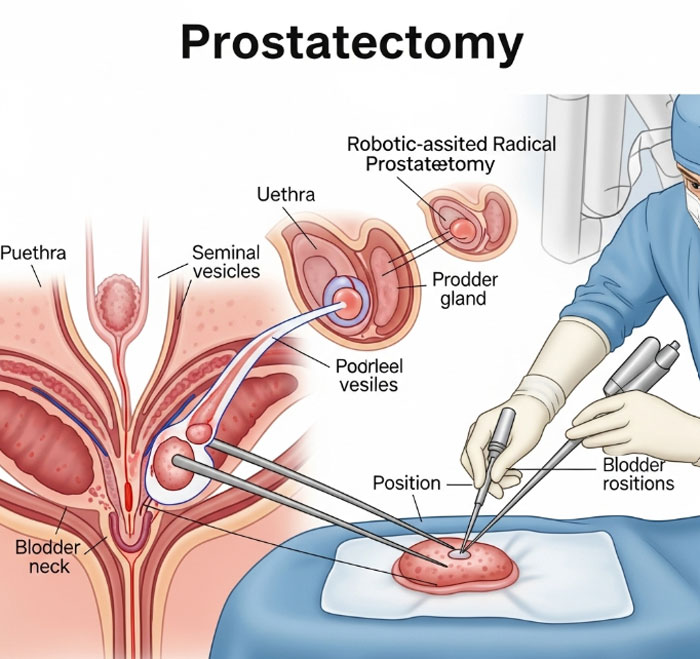
The website lists laparoscopic and robotic-assisted prostatectomy as options where several small incisions are made and extra prostate tissue is removed.
This section should be kept general unless more detailed content is later added from your own website.
7)Radical prostatectomy for prostate cancer
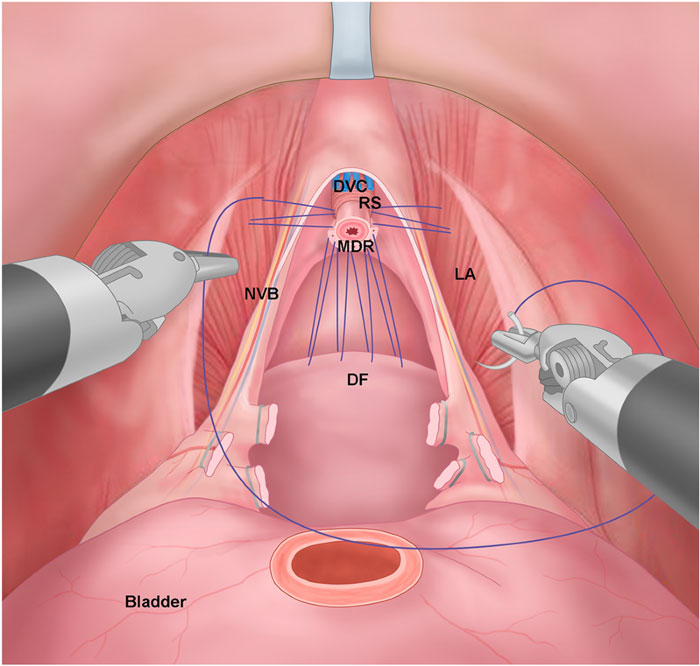
Radical prostatectomy is performed to remove the whole prostate gland for prostate cancer. The website explains that the treatment choice for prostate cancer depends greatly on the stage of the tumor.
Radical prostatectomy may be performed alone or combined with radiation or hormone therapy when the treating physician recommends it. Before surgery, bone scan, CT scan, PET scan in some cases, and blood tests may be needed.
FAQ
1)Is Rezum a surgery?
The website describes Rezum as a minimally invasive non-surgical treatment performed through the urethra.
2)Is TURP the same as prostate shaving?
The website uses TURP and prostate shaving to describe transurethral removal of the obstructing prostate tissue.
3)When is open prostatectomy used?
It may be used for very large prostates, severe complications, or situations requiring open surgical access.
4)Is radical prostatectomy used for BPH?
Radical prostatectomy is described as a cancer surgery that removes the whole prostate.
5)Can prostate surgery affect ejaculation or erections?
Yes. The risk depends on the type of surgery and patient factors.
Learn more about minimally invasive Rezum therapy for enlarged prostate.

Official hospital profile
Specialist Urologist at American Academy of Cosmetic Surgery Hospital
Dr. Seyed Amin Mir Sadeghi's official professional profile is published on the hospital website.