


Enlarged Prostate and Rezūm: 40 Questions Answered
Urinary symptoms, medication side effects and worries about sexual function can make prostate treatment a difficult decision. These 40 answers explain the choices and what to expect from Rezūm. Dr. Amin Mir Sadeghi’s clinical experience includes more than four years performing Rezūm and approximately 100–150 cases annually. Your symptoms, anatomy, bladder function and priorities guide the recommendation.
Related reading: Compare Rezum, Aquablation, HoLEP, TFL, TURP and UroLift to discuss treatment differences, recovery and sexual function.
Explore Rezūm treatment in Dubai · Read the full treatment and recovery guide
Premium Consultation with Dr. Amin
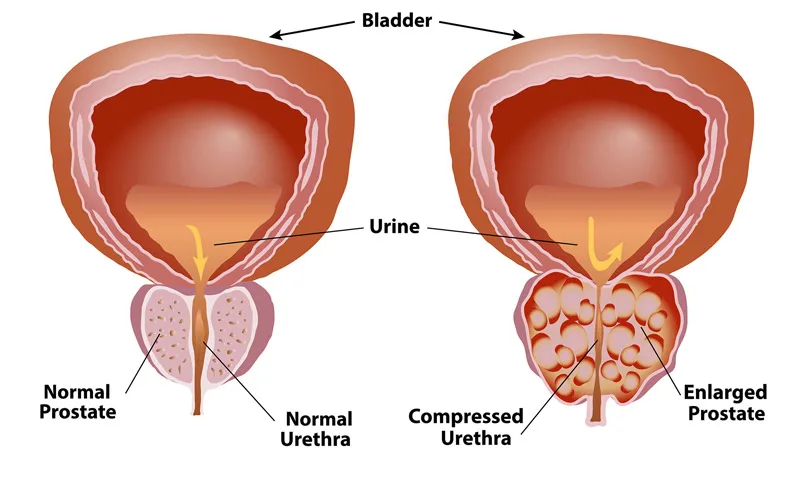
1. What does an enlarged prostate feel like?
A weak stream, hesitancy, frequent or urgent urination and a feeling of incomplete emptying are common symptoms. You do not usually feel the size of the gland itself. Benign enlargement becomes more common after 50, but not every man develops troublesome symptoms. Infection, bladder dysfunction and other conditions can produce similar problems, so Dr. Amin first establishes the cause.
Read the guide to benign prostate enlargement.
Related reading: Prostate conditions and treatment options.
2. How can I tell whether my prostate is enlarged?
Symptoms alone cannot confirm the diagnosis. Assessment may include your symptom score and medication history, examination, urine testing, ultrasound, urine-flow measurement and the amount left in the bladder after urinating. PSA is discussed according to age, risk and whether its result would affect management. Bring previous scans and a short bladder diary.
Read the guide to benign prostate enlargement.
Related reading: Prostate conditions and treatment options.
3. Can an enlarged prostate return to normal size on its own?
Age-related benign enlargement does not usually shrink back to its previous size without treatment. Symptoms can nevertheless fluctuate. Medicines or a procedure may reduce obstruction when needed; the goal is comfortable urination and safe bladder emptying, rather than achieving a particular scan measurement.
Read the guide to benign prostate enlargement.
Related reading: Prostate surgery options.
4. What prostate size is considered enlarged?
A volume around 30 mL or more is often described as enlarged; one millilitre equals one cubic centimetre. Size alone does not determine whether treatment is needed. Current US labeling for Rezūm covers men aged 50 or older with a prostate volume of 30–150 mL, including suitable median-lobe enlargement. Dr. Amin considers the anatomy, obstruction, symptoms and bladder function together.
Read the detailed Rezūm guide.
Related reading: Prostate surgery options.
5. Which foods and drinks should I avoid with an enlarged prostate?
Caffeine, alcohol and large drinks late in the evening may worsen urgency, frequency or night-time urination. A diary helps identify your own triggers. Spread fluids through the day without becoming dehydrated, and address constipation. Diet changes can improve comfort but do not remove a significant prostate obstruction.
Read the guide to benign prostate enlargement.
Related reading: Rezūm water vapour treatment for the prostate.
6. Can Rezūm be considered for a prostate larger than 150 mL?
A prostate above 150 mL needs a particularly careful comparison of treatment options. In selected patients, Dr. Amin may consider a prostate-shrinking medicine and reassess after several months, sometimes around six months. Shrinkage below 150 mL and suitability for Rezūm are not guaranteed. Tissue-removing surgery may be more appropriate, especially with marked obstruction or complications.
Read the detailed Rezūm guide.
Related reading: Prostate surgery options.
7. Does ejaculation help or worsen an enlarged prostate?
Ejaculation is not an established treatment for benign enlargement and usually does not need to be avoided simply because the gland is enlarged. Pain, persistent blood in semen or new discomfort should be assessed. Before treatment, tell Dr. Amin if ejaculation or future fertility is a particular priority.
Read the guide to benign prostate enlargement.
Related reading: Prostate conditions and treatment options.
8. What shrinks the prostate quickly?
Quick symptom relief is different from shrinking the gland. Alpha-blockers relax muscles around the outlet and may work relatively quickly. Medicines that reduce prostate volume generally work over months. Rezūm also works gradually as treated tissue is absorbed. Inability to urinate needs urgent drainage and assessment, not a home remedy or a wait for shrinkage.
Read the guide to benign prostate enlargement.
Related reading: Prostate surgery options.
9. Can I have Rezūm if I have heart disease or a pacemaker?
Some men whose cardiac or anaesthetic risk makes another prostate operation unsuitable may still be considered for Rezūm. The decision requires joint planning with the anaesthesia and cardiac teams. A pacemaker does not automatically exclude assessment, but its type, settings and monitoring requirements matter. These patients may need additional monitoring and hospital care; an outpatient procedure is not automatically appropriate.
Read the detailed Rezūm guide.
Related reading: Prostate conditions and treatment options.
10. Why do I wake frequently to urinate at night?
Prostate obstruction is one possible cause. Evening fluid intake, diabetes, sleep apnoea, fluid redistribution and bladder conditions may also contribute. A diary of the time and volume of each urination can help. Rezūm treats suitable prostate obstruction; it cannot be expected to resolve every cause of nocturia.
Read the guide to benign prostate enlargement.
Related reading: Prostate conditions and treatment options.
11. When does difficulty urinating become serious?
A complete inability to pass urine, particularly with a painful full bladder, requires urgent assessment. Fever with urinary symptoms, severe pain, heavy bleeding or a blocked catheter also needs prompt medical attention. A progressively weaker stream deserves review before an emergency develops.
Read the guide to benign prostate enlargement.
Related reading: Prostate surgery options.
12. How long is recovery from enlarged-prostate treatment?
After Rezūm, many patients can return to light activities within several days, but recovery is gradual. In suitable uncomplicated cases, Dr. Amin aims to remove the catheter around day four or five. Previous retention, bladder function and prostate size can extend catheter use to two weeks or longer. Temporary burning, blood in urine, urgency or frequency can occur, and fuller benefit often takes several weeks to a few months.
The procedure itself commonly takes about 10–15 minutes, with additional time for preparation and anaesthesia. Same-day discharge is possible for selected patients; Dr. Amin may arrange overnight care when appropriate. Follow your individual plan for work, exercise and sex.
13. What should I ask my urologist about an enlarged prostate?
Ask whether the symptoms are caused by prostate obstruction, how well your bladder functions and which options fit your anatomy. Discuss medication, ejaculation and fertility priorities, catheter duration, recovery, durability, possible retreatment and costs. Dr. Amin’s reported Rezūm experience includes more than four years of treatment and approximately 100–150 cases annually; individual assessment remains central to choosing the right option.
Read the detailed Rezūm guide.
Related reading: Prostate surgery options.
14. What is the difference between prostate artery embolisation and TURP?
TURP removes obstructing tissue through the urethra. Prostate artery embolisation reduces blood supply to the enlarged tissue through arterial catheters. Rezūm uses targeted water-vapour energy without removing tissue immediately or leaving a permanent implant. These are different approaches, but it is useful to compare their likely relief, recovery, sexual effects and retreatment needs. No method is best for every patient.
Compare prostate treatment options.
Related reading: Benign prostate enlargement.
15. Does insurance cover prostate surgery?
Some policies may cover part or all of an eligible prostate procedure, including Rezūm, but coverage depends on your diagnosis, policy, hospital network and any prior authorisation. Obtain written confirmation and an itemised quotation before booking. The assessment, device, surgeon, anaesthesia, hospital stay and follow-up may be handled differently by the insurer.
16. Which is better for an enlarged prostate: medication or surgery?
Medication works well for many men, but an appropriate procedure need not always wait until medicines fail. A suitable patient may discuss Rezūm before starting long-term medication, or while medication still helps, if avoiding ongoing treatment or medication side effects is a priority. Retention, infections, stones or kidney consequences may change the urgency and the preferred procedure. Dr. Amin compares the choices with your goals and examination findings.
17. Can I have sex after prostate treatment?
Many men return to a satisfying sex life after treatment. Preserving erections and ejaculation is a particular reason to consider Rezūm, and clinical studies provide reassuring results for suitable patients. This does not mean zero risk: reduced semen volume, absent ejaculation or other sexual changes can occur. If a medicine contributed to sexual problems, improvement after stopping it is possible but not assured.
Resume sex when healing and comfort allow and the treating team has advised you. Ask specifically about fertility if future children are important to you.
Read the detailed Rezūm guide.
Related reading: Erectile dysfunction: causes and treatment.
18. What is the least invasive treatment for an enlarged prostate?
Monitoring and lifestyle measures may be enough for mild symptoms. For a suitable man seeking a procedure, Rezūm is one minimally invasive option performed through the urethra without an external incision. It leaves no permanent prostate implant, unlike UroLift. Steam produces controlled thermal injury in the target tissue, which is absorbed over time. The appropriate choice depends on the obstruction and the outcome you want, not the label “least invasive” alone.
Read the detailed Rezūm guide.
Related reading: Benign prostate enlargement.
19. Is an enlarged prostate in a younger man a concern?
Urinary symptoms in a younger man still deserve assessment. Prostatitis, infection, urethral narrowing or bladder dysfunction can resemble benign enlargement. Current US Rezūm labeling specifies age 50 or older; suitability and the applicable local device instructions must be reviewed rather than assuming every younger symptomatic man is a routine candidate.
Read the guide to benign prostate enlargement.
Related reading: Prostate conditions and treatment options.
20. How can I manage prostate symptoms without surgery?
A bladder diary, sensible fluid timing, reducing caffeine, managing constipation and prescribed medicines may help. Observation is appropriate for some mild symptoms when emptying is safe. Medicines do not commit every patient to an unchanged lifetime prescription: response and side effects should be reviewed, and procedural alternatives can be discussed when appropriate.
Read the guide to benign prostate enlargement.
Related reading: Rezūm water vapour treatment for the prostate.
21. Which medicines treat an enlarged prostate?
Alpha-blockers relax the prostate and bladder outlet; 5-alpha-reductase inhibitors gradually reduce volume in appropriately enlarged glands. Tadalafil and bladder-directed medicines are additional options for selected symptoms. Different medicines have different effects: some can cause dizziness or low blood pressure, altered ejaculation, reduced libido or erectile difficulty. These effects are possible, not inevitable. Discuss sexual priorities and other prescriptions before choosing treatment.
Read the guide to benign prostate enlargement.
Related reading: Erectile dysfunction medicines.
22. Can Rezūm be repeated, and can I have another prostate operation later?
Repeat Rezūm is possible for selected patients after the cause of recurrent or persistent symptoms is assessed. A remaining obstruction, regrowth, bladder dysfunction or a urethral narrowing may require different management. Having Rezūm does not necessarily prevent TURP, HoLEP or another later procedure. Repeat treatment is a clinical decision, not an unlimited or guaranteed option.
23. Can I have Rezūm while taking blood thinners?
Some selected patients may undergo Rezūm while continuing certain antiplatelet or anticoagulant medicines. Others need a planned interruption. The choice depends on the medicine, kidney function and the balance between bleeding and clotting risks, with input from the prescribing doctor. Continued therapy can increase bleeding risk. Never stop, restart or continue a blood thinner for surgery without the agreed medical plan.
Read the detailed Rezūm guide.
Related reading: Prostate conditions and treatment options.
24. Does symptom severity depend on prostate size?
Not directly. A 30–40 mL prostate may cause important symptoms, whereas a 70 mL prostate may cause few. The shape and location of the enlarged tissue, the degree of obstruction and the bladder’s strength and sensitivity all matter. Dr. Amin considers flow, residual urine and symptom severity alongside volume rather than treating the scan number alone.
Read the guide to benign prostate enlargement.
Related reading: Prostate surgery options.
25. What should I avoid with an enlarged prostate?
Do not ignore worsening emptying, stop prescriptions without advice or rely on supplements to remove an obstruction. Some cold remedies can make urination more difficult. No food, exercise programme or supplement reliably replaces assessment for significant obstruction. Bring a list of all medicines and supplements to your appointment.
Read the guide to benign prostate enlargement.
Related reading: Prostate surgery options.
26. What is the difference between benign enlargement and prostate cancer?
Benign enlargement is non-cancerous growth; prostate cancer is a separate disease, and both can coexist. Rezūm treats suitable benign obstruction and is not a treatment for prostate cancer. Cancer assessment is based on risk and findings such as PSA, examination and, when indicated, further tests. A good urinary result after Rezūm does not remove the need for appropriate cancer screening.
Read the guide to benign prostate enlargement.
Related reading: Prostate conditions and treatment options.
27. How often do I need a prostate check?
Follow-up for urinary symptoms and screening for prostate cancer serve different purposes. PSA discussions and testing intervals are tailored to age, family history, genetic risk, health and previous results. An annual ultrasound is not a substitute for a risk-based cancer-screening plan.
After Rezūm, Dr. Amin’s usual follow-up includes urine testing and ultrasound at approximately one month and six months. Symptoms or catheter problems may require an earlier review.
Read the guide to benign prostate enlargement.
Related reading: Prostate conditions and treatment options.
28. Can Rezūm help if I have Parkinson’s disease or a neurogenic bladder?
Rezum treats suitable prostate obstruction, not the neurological disorder itself. In Parkinson’s disease or neurogenic bladder, symptoms may reflect obstruction, impaired bladder contraction, overactivity or a combination. Dr. Amin may recommend bladder-function testing before deciding whether an outlet treatment could help. Reliable relief of neurogenic incontinence or a zero risk of leakage cannot be promised.
Read the detailed Rezūm guide.
Related reading: Prostate conditions and treatment options.
29. How can I manage daily life with an enlarged prostate?
Plan toilet access, spread fluids through the day and reduce large late-evening drinks without becoming dehydrated. Address constipation and medicines that affect emptying. If symptoms disrupt sleep, work or travel, discuss treatment rather than continually adapting your life to the problem. Rezūm may reduce the need for long-term medication in a suitable patient, but the response is individual.
Read the guide to benign prostate enlargement.
Related reading: Rezūm water vapour treatment for the prostate.
30. Why does the prostate enlarge with age?
Benign enlargement involves age-related, hormone-influenced changes in prostate tissue. It becomes more common with increasing age, particularly after 50, but not all men develop bothersome symptoms or need treatment. The decision to intervene is based on symptoms, obstruction, bladder emptying and complications, not age alone.
Read the guide to benign prostate enlargement.
Related reading: Prostate conditions and treatment options.
31. Is Rezūm suitable if I already have a penile implant or artificial urinary sphincter?
A penile prosthesis or an artificial urinary sphincter is a contraindication to the Rezūm device. An active urinary tract infection is also a contraindication. Tell Dr. Amin about every implanted device and previous pelvic procedure before planning treatment. Other options should be assessed when a contraindication applies. An infection must be treated before a prostate intervention is considered.
Read the detailed Rezūm guide.
Related reading: Prostate surgery options.
32. When should I see a urologist about a prostate problem?
Arrange a review for a persistently weak stream, urgency, frequent night-time urination or a feeling of incomplete emptying, especially if sleep and daily activities are affected. You do not need to wait until medication fails to discuss options. Inability to urinate, fever with urinary pain, or heavy bleeding needs urgent care.
Read the guide to benign prostate enlargement.
Related reading: Prostate conditions and treatment options.
33. Can urinary retention cause complications?
Yes. Retention can lead to infection, stones and injury to bladder or kidney function. Urgent drainage and assessment come first when you cannot pass urine. Selected catheter-dependent men can be considered for Rezūm, but successful catheter removal depends partly on bladder function and the cause and duration of retention. Catheter use can extend beyond two weeks, and freedom from a catheter is not guaranteed.
Read the detailed Rezūm guide.
Related reading: Benign prostate enlargement.
34. How accurate are prostate tests?
No single test gives the whole answer. PSA is not a perfect cancer test and is not a direct measure of obstruction. Ultrasound assesses size and residual urine; urine-flow and selected pressure-flow studies help evaluate emptying. Prior pelvic or prostate operations may change anatomy and make additional assessment useful. Dr. Amin explains which findings matter for your treatment.
Read the guide to benign prostate enlargement.
Related reading: Prostate conditions and treatment options.
35. What happens during a prostate examination?
The consultation begins with symptoms, medicines and your medical and surgical history. Examination and selected urine, flow, imaging or PSA tests follow as appropriate. A rectal examination may be suggested after explanation and consent; you may request a chaperone. For Rezūm planning, prostate shape and median-lobe anatomy can be as important as overall volume.
Read the guide to benign prostate enlargement.
Related reading: Prostate conditions and treatment options.
36. What is the relationship between benign enlargement and erectile dysfunction?
Urinary symptoms and erectile dysfunction can occur together because of age and shared health factors. Some prostate medicines can also affect libido, erections or ejaculation. Discuss both problems openly. Rezūm is often considered when preserving sexual function and reducing medication burden are priorities, but it is not an erectile-dysfunction treatment or a guarantee that pre-existing sexual problems will resolve.
Read the guide to benign prostate enlargement.
Related reading: Erectile dysfunction: causes and treatment.
37. Should I tell my employer about prostate treatment?
You can request leave or temporary adjustments without sharing intimate details. Desk work and heavy physical work have different recovery demands. A short procedure does not mean that catheter care, urgency or fatigue will have resolved immediately. Ask the team for a medical certificate and an individual return-to-work plan.
38. Can travel and flying worsen prostate symptoms?
Toilet access, caffeine, constipation and disrupted medication or fluid routines can make symptoms harder to manage while travelling. Before flying after Rezūm, discuss catheter care, access to urgent help and your review appointments. Dr. Amin generally continues prostate medication for about one month after Rezūm, then decides whether it can be stopped; do not change it simply because you are travelling.
Read the detailed Rezūm guide.
Related reading: Benign prostate enlargement.
39. What is the success rate of modern prostate procedures?
Success may mean better symptoms, improved flow, stopping medication or avoiding another operation; these are different outcomes. Rezūm’s pivotal trial demonstrated sustained improvement through five years, with a 4.4% surgical retreatment rate in its original 30–80 mL population. That number does not include every return to medication and does not guarantee the same result in every prostate up to 150 mL. There is no dependable rule that a larger gland lasts three years and a smaller one ten.
40. Is delaying enlarged-prostate treatment dangerous?
Mild symptoms with safe emptying can often be monitored. Delaying assessment of significant obstruction is different: retention, infections, stones and bladder or kidney problems may develop. A suitable man can discuss Rezūm before starting medication or before it stops working, but prompt tissue-removing surgery or another approach may be preferable when complications or severe obstruction demand it.
Discuss your next step with Dr. Amin
Bring your reports and medication list to discuss your goals and a plan suited to your condition. Request a consultation appointment.
Selected sources: NIDDK: enlarged prostate · Rezūm five-year clinical trial. · FDA indication update · Sexual-function follow-up · Rezūm safety information
Private office · Personalised care
Consultation & Outpatient Procedures
Meet Dr. Amin Mir Sadeghi at his private practice within Medical Village Dubai for confidential, personalised urology care. Outpatient treatment options are discussed after an individual medical assessment.
Medical Village · Al Manara, Dubai
Clinic hours: Daily, 12:00–19:00, by prior appointment
Appointments & WhatsApp: +971 56 796 3993
All times are Dubai time.
Surgical care in Dubai
Hospitals for Urological Surgery
Dr. Amin Mir Sadeghi performs urological surgery at American Academy of Cosmetic Surgery Hospital and Trellis Hospital in Dubai. Contact Dr. Amin's team to discuss your procedure and arrange your appointment.
Surgical care with Dr. Amin · Dubai
Surgical care with Dr. Amin · Dubai
Appointments are arranged directly by Dr. Amin's team. The team will confirm the hospital and availability.